Online School of Cocktailory 🍸
For drinking #alonetogether
Section 106: The Flip
In the martini chapter we learned about vermouths: wines that are fortified with extra booze and flavored with botanicals. Here we’ll learn about unflavored fortified wines, like sherry, port and madeira.
Sherry can range from super dry and almost salty, to super juicy sweet and raisiny based on how it’s aged. I can’t say I’ve ever enjoyed Sherry even in food, but maybe learning more about it will help.
All sherry is aged in oak barrels, but instead of being filled to the top like other wines to limit oxygen, sherry casks are filled to 80% which allows a layer of yeast called flor to grow, creating a protective barrier on top of the young wines to prevent oxidation. This is called biological aging, and it makes for dry sherries like fino and manzanilla. To make an amontillado or palo cortado sherry, you would then age the cask again without the flor.
Oloroso and Pedro Ximénez are richer flavored sherries that are intentionally barreled with oxygen, giving them a nutty flavor. As the sherry oxidizes, the alcohol vapors evaporate, making them more concentrated.
The casking process to make sherries and ports also differs from other wines because they go through Solera (or fractional) aging, which is super creepy! Most aged wines, beers, or spirits are distilled, then barrel aged, and maybe blended or aged again before they’re bottled and distributed with a record of each step and vintage. But not with our Fibonacci booze here! So for sherry, traditionally the newest barrels would be placed on a top shelf at the winery, and each shelf below would house older and older blends. Then, several times a year some of the wine from the oldest barrel (or Solera as it’s named) is bottled and that partial volume is replaced with some wine from the next oldest casks above it. Those casks are then topped up with the ones above it, and so on, and so on, until we get to the youngest barrel (or sobretabla) and when that guy is emptied you make a new batch. No barrels except the newb are ever fully empty, and because of this the sherry from the Solera has trace amounts of extremely old wine, sometimes dating back centuries depending on the winery. Besides being super complicated, it does make for an extremely consistent wine each year. That being said, once they’re bottled and shipped to your store, they tend to break down with age, so don’t keep these for more than 2 years.
Styles: Fino is the dry youngin made from palomino grapes. Manzanilla is a fino from one town in Southern Spain, and those sherries are a little extra briny. Usually 1 teaspoon to 1/2 oz of these is used in drinks to make them kinda salty/creamy, lol >insert Mike joke here< Finos and manzanillas are also sometimes served ‘en rama’ or raw to the locals, but the raw wine doesn’t export well. So the next time you’re popping by Sanlúcar de Barrameda, be sure to hit up some tasting rooms for me.
Amontillado has dry, salty, yeasty flavors like fino from the biological aging with flor, and some concentrated nutty, dried fruit flavors since it also goes through oxidative aging. Lustau Los Arcos Amontillado tends to be a bartender favorite. Palo Cortado is similar, but spends less time in the flor cask, and has a raisin, coffee, molasses smell.
Olorosos just go through oxidative aging, and can be treated like a sweet vermouth in cocktail recipes, just without the extra spices and sweetener.
Sweet Sherries are concentrated dessert wines where the grapes sun-dry to almost raisin status before it’s fortified and then barrel aged. Pedro Ximénez grapes make the sweetest sherry, like a simple syrup. Moscatel is made from Muscat of Alexandria grapes which have a strong floral perfume smell (so use small amounts when mixing, like a teaspoon max.)
Cream Sherries, which get a bad rap since so many cheap cooking wines have this label, just means that different types of sherry were mixed together. Many of these make a good sub for sweet vermouths like Aperol or Campari.
Port is made from a blend of Portuguese grapes, and unlike sherry, are crushed, fermented, and then later fortified with a young grape brandy. Ruby port is aged in wood casks for 2 yrs min. Vintage port is aged in casks for 2 yrs min. as well, but then aged again in bottles for many more years, and doesn’t have the same breakdown issue that sherry does. Late-bottled vintage port stays in the casks 6-8 yrs, but doesn’t have to be bottle-aged. Colheita port is cask-aged even longer. And finally tawny port is a blend of different cask-aged ports, and also is not bottle-aged.
Madeira is grouped by age, Rainwater being the youngest at 3 yrs. min. in oak barrels is the cocktail mixer of choice. It makes drinks seem lighter and just a tiny bit sweet and fruity.
All of these wines can be treated like a sweet vermouth when mixing, but each obviously comes with it’s own flavor. Again, because these are wine, they need to stay refrigerated after opening, and still only last about a month max. in there.
Feel free to experiment with some different sherries this week. You could either do a few in little tasting glasses, or make a classic flip:
-The Flip-
Dry shake together (which means no ice)
the following ingredients:
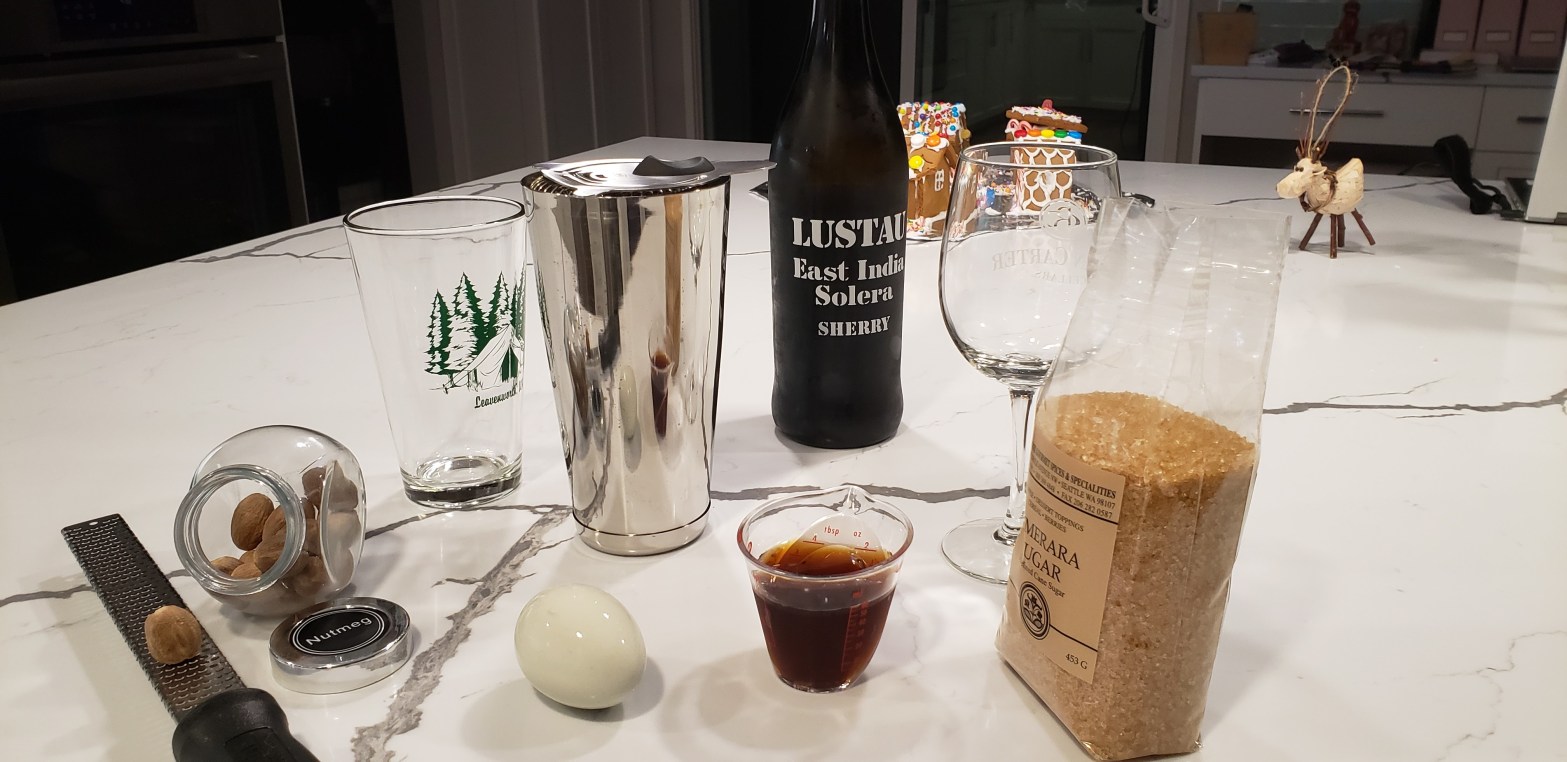
2 oz. of a fortified wine
2 teaspoons of demerara sugar (which is kind of a course ground brown sugar)
and 1 whole fresh egg
(I know gasp right? Flips are a celebration of decadence and wholehearted disregard for nutrition. Tis the season party people!)
Once your ingredients are mixed really well, shake again with ice and double strain into a chilled coupe. (Double strain means use your regular strainer and a fine mesh sieve to remove any ice chunks that can break the egg’s emulsion to the liquor, or make egg whites go flat). Grate a little nutmeg on top and cheers!
 Jet Tries
Classic Flip round II, during which Jet learns that all of her previously trusty shakers leak when egg expands. Time to go shopping. Tonight’s egg was also more yolk-y. Which is weird. And required additional nutmeg sprinkles.
The Apple Brandy Flip
– for when it’s not really fall, but not really winter yet – smells like a rainstorm and the holidays – strong enough for a nightcap, but has enough protein for post-work-out muscle recovery. Hits the spot
White Chocolate Raspberry Flip
(I made it up, and it’s as good as it sounds)
2 oz vodka
1 1/4 oz Borgota white chocolate liqueur
1/2 oz Chambord
1/2 oz cream
Shaken & garnished with fresh raspberries on a pick