Theme: I Understand
Acknowledging the possibilities
…. To be continued soon…
click a topic, and try something new
Theme: I Understand
Acknowledging the possibilities
…. To be continued soon…

Theme: I See
Acknowledging the visible and invisible world
Chapter 4: Intuition & Somatic Memory
Somatic Memory or somatic intelligence is a body’s independent intelligence. The body holds embedded memories just like the brain does, and somatic practice is the integration of awareness between the body’s nonverbal communication system and the mind. Think of it like its own style of meditation. Somatic healing is about listening to the language of immediate experiences, without any verbal messages or any planned intentions, and giving them a voice.
We existed as wild creatures long before humans stood tall, or used tools, or formed languages. We could feel when the weather was turning on us, or danger lurked in the dark without hosting an incessant internal dialog about it. Your stomach might feel upset or legs feel twitchy because you know something bad is coming, but your brain doesn’t have a way to describe how it knows. Like being carsick inside your own skin. Your brain wants to take action to make the uneasy feeling stop, so it knee-jerk does whatever made the feeling stop last time based on its embedded memories. A simple example would be like having to pee. Or having to pee while sleeping. You don’t just pee the bed every night, and you don’t wake up and have a conversation about it with yourself either. Your body just gets up and goes to a bathroom. Crisis is averted, you feel better, and positive reinforcement is repeated with minimal effort. This might be a crass description of our mysterious and magical sixth sense, but it is one of our body’s intuitive responses, based on an embedded memory. The original memory of potty training no longer matters once the new learned behavior is locked in.
But not all learned behaviors are beneficial. A body that is in pain with tight muscles or limited flexibility is more likely to feel nervous and threatened, and read it’s surroundings as dangerous unnecessarily. And it’s more likely to look for outward sources to soothe itself quickly. It is significantly easier to become reliant on quick-fix coping mechanisms than it is to diagnose a problem we can’t put words to. It’s also easy to trust these quick-fixes too quickly and form disappointment loops when our body’s needs, and its huge expectations, are never actually fulfilled. Our body remembers the coping mechanism giving us relief, at least for a short time, so it tries it again and again and again and again frantically hunting for the cure. But small doses can become big doses hoping for bigger relief, and our somatic intelligence system can’t process why this isn’t working. And the longer it’s been ingrained, the harder it gets to change.
Somatic healing is not a quick-fix. But it is a real fix. It takes lots of repetition and patience with yourself, just like starting any other good habit. Digging new ruts feels awkward for a while. That’s ok. So start off by listening to the queues. What is your body seeing, feeling, remembering, or being triggered by? Give everything words. It can be a real description, or if the feelings are too vague still, give them each a placeholder nickname, like ‘weird air’, or ‘purple elephant’. It doesn’t really matter yet. Someday maybe you can give the purple elephant more words, but today we just need to acknowledge its existence. (Side note: to clarify here, I’m not trying to make anyone dig up repressed memories or re-live traumatic events. Even if those were the origin that kicked off the triggers, the goal here isn’t to write an autobiography of our pain, the goal is somatic or systemic healing.)
Once you’ve named a trigger, next name whatever symptoms go with it. Queasy, dizzy, shaking, sweating, rage…? There’s no wrong answer, we’re just giving names to feelings. When these symptoms start, what is your first reaction to do? Usually it’s some sort of: fight, flight, self-soothe, medicate or eat, smother, distract, etc… Don’t do it right now, just feel it. Name it. Our body (or rather our somatic intelligence system) follows this pattern: “when I’m triggered by <unknown elephant> and I feel <twitchy and scared> then I will <eat and binge watch tv> until the feeling stops.” /end. Your body is trying to avert a crisis for you, like not peeing the bed at night, but it can’t mentally process or reason anything more complicated than that. All it’s got to work with is a series of muscle twitches and gut bacteria. This is the language of immediate experiences. And this is where the mind has to step in and help sometimes. Hence the need for somatic practice, to bridge the gap between the body’s nonverbal communication system and the mind when the reactions aren’t healthy.
So now that you’ve named a pattern, what do you hope to feel or accomplish by doing the action? Does your action rationally have anything to do with the original trigger or symptoms if you give yourself some time to reflect? Your body chose the action because it just wanted the uncomfortable part to go away, but what about you? What would be the perfect scenario? What would a better path be like? How do you get to that?
By giving our queues and triggers a real name, we slowly take away some of the fathomless dread they carry. If we can detach our symptom from it, we can release the body’s unnecessary danger signals, and reset its expectations to slowly help it heal and carve out new, healthier paths of our choosing.
I (like most people) am triggered by tons of things all day long. I am afraid of heights for example, and I don’t even have to be that far off the ground. I actually love being up high, looking out airplane windows, and I think being able to fly like a bird would be sheer bliss. I wasn’t always afraid of heights, I don’t want to be afraid of heights, but I’ve apparently fallen enough times in my life out of trees, off ladders, monkey bars, bleachers and hills, and sprained enough ankles that my body has created symptoms like extreme vertigo and sweating if I’m ever more than a foot off the ground. And my action is to freeze and very slowly lower my whole body back down to somewhere stable until the panic subsides. Where I can’t get hurt. Do my actions and symptoms have anything to do with being on a step stool? No. Going up 2 ft. of elevation doesn’t make people sweat or dizzy. So I can now relabel my trigger as not a fear of heights, but my body’s embedded memory of injury when the ground doesn’t look or feel stable. If someone else is flying the airplane I’m fine. My symptoms aren’t actual ailments that need treatment, they are a non-verbal communication of that fear of injury. And my action response to lay on the floor isn’t a reasonable solution since I’m going to need to use step stools and ladders for the foreseeable future. Could I avoid them forever? Maybe. I wish. Is that mentally a healthy lifestyle solution? Not really. So I ask myself what would be my perfect scenario here, and how do I get to that? How can I climb ladders and reassure my body that I won’t get hurt? Maybe larger steps and a handrail, or someone below the ladder for stability. Maybe I should do more root chakra exercises for muscular and joint stability if my body knows that something internally isn’t steady. The more I firm up my foundations and practice the new path I want to be on, someday the symptoms will ease and the fear pattern will end.
All of our muscles and nervous systems have to talk to each other to work correctly. When they’re scared and not functioning properly we have to slowly teach them how we want them to behave and communicate what’s expected from them. Like teaching a child. You wouldn’t just toss one in a job site or an office cubicle and expect them to know what to do. You need lots of practice to embed good memories and experiences to draw from first. The stretches this week are neck side bends. Are they repetitive? Yes. But that’s how we form good habits.
Standing Lateral Neck Stretch w/ rotation
References this week from Jo Ann Staugaard-Jones “The Vital Psoas Muscle”

Theme: I See
Acknowledging the visible and invisible world
Chapter 3: Lucidity & Looking Deeper
Lucidity comes from the Latin lucidus meaning “light, bright, or clear.” As a personal quality, being lucid means to be completely and easily understandable. Being transparent with nothing hidden in your words, actions, or appearance. As an action, using your lucid eye or lucid sight means looking beyond the physical or material forms in front of you, and seeing quality.
What do you see when you look at a person? Do we look at people we know differently than strangers? Just walking around out in public I probably spend less than a second each gauging how near or far away people are so that I don’t bump into them, and vaguely how threatening vs. in distress they might be to determine if I need to react or not, and then move on with my day. I can’t say I spend much time assessing how stylish or fit, cheerful, tall, short, old, or classically attractive anyone is ever, whether I know them or not. Those qualities in other people don’t really affect me, so I suppose I’ve never learned to pay them much attention. I’m sure everyone’s got different levels of what they pay attention to though, this is just my experience through the filter of what’s been important in my life.
A cousin and I once noticed over a few glasses of sangria one night that we remember the people we know or friends we like as actually more attractive than people we don’t know or people that have treated us poorly. As if the actual mental image memories of them are altered to remind us later who we liked or didn’t. An inner qualities filter or watermark for future reference.
I was watching a movie last night and there was this couple, maybe in their mid 50’s lying in bed talking about their lives, and it made me think, what would a couple like that see when they look at each other? I imagine they still spend about a second gauging how threatening vs. in distress the other person is on a basic level. And they’d vaguely be aware of what the other person is wearing, or how fit or cheerful they seem at that moment in time. But there’s a whole other pile of filters happening on top of that image beyond the basic like/don’t like. Filters of how many times they’ve looked at each other, and their memories of this same face changing over time. Different places they’ve been or lived together. Summer tans and freckles and scars and hair styles. How life experiences have shaped them, and the feelings that all of those moments left behind. They’d overlay this current image with millions of similar ones from months or years back until the picture itself becomes less of looking at a person and more of a feeling. Of safety. Of struggles. Jealousy. Lust. Comfort. Determination. Perseverance. Pride. Sorrow. Loss. Camaraderie.
So now, what do you see when you look at a person? How many filters of time, and memories, and safety and distress can you see? How lucid or transparent are they? And what about yourself?
The exercises this week are for your eyes. Notice as you do each as you look around, all the work and information your eyes constantly provide.
Theme: I See
Acknowledging the visible and invisible world
Chapter 2: Meditation & Contemplation
Have you ever looked straight into someone’s eyes for a prolonged amount of time? It’s really eerie. It makes most people uncomfortable and they usually start laughing from nerves to break the tension, fidgeting, looking away, or even crying. A very public example of this is Marina Abramovic’s 2010 installation/performance at the MoMA called “The Artist is Present.” People who sat to face her described feelings like time changing speed, or like prayer. No one could imagine at the time why people would want to come to a museum just to sit and look into the eyes of a stranger. But for 8 hour days for almost 3 months, lines of people waited, craving this peculiar human contact: to have someone look at them.
New York Times article
artnet.com article
MoMA.org article
I couldn’t tell you the eye color of most of the people I know. Staring into someone’s eyes feels like an invasion of privacy without consent; too personal; too dangerous. Even staring at my own eyes in the mirror has an other-worldly feeling like if I look too long, some portal to something I’m not prepared for will open and demons or something will gust out. It’s a curious thing: to see, and be seen.
“Everyone around you can see you.” That sentiment makes some people feel important. And it makes others wish they were invisible.
“The overwhelming majority of people you will encounter don’t give you a second thought. You are a blip on their radar from their perspective, with their busy lives and busy minds.” That sentiment makes some people feel worthless. And it makes others feel wonderfully light and free.
Both statements are true, but honestly neither of them have anything to do with you or your feelings.
Being seen and being important are not the same thing.
You can change the way you look or change your behavior to become more or less noticeable. You can be noticeable in a good or bad way. You can be noticeable IRL or online.
None of those things make you important. You just are.
You exist. You feel. You do things that cause repercussions, both good and bad. You love. You communicate. You create. You see the world around you and glean information from it. You have an effect on the communal energy pool that surrounds us all. What do you see around you? What energy do you feel around you? How do you want to be seen? What energy do you want others to feel when they are near you?
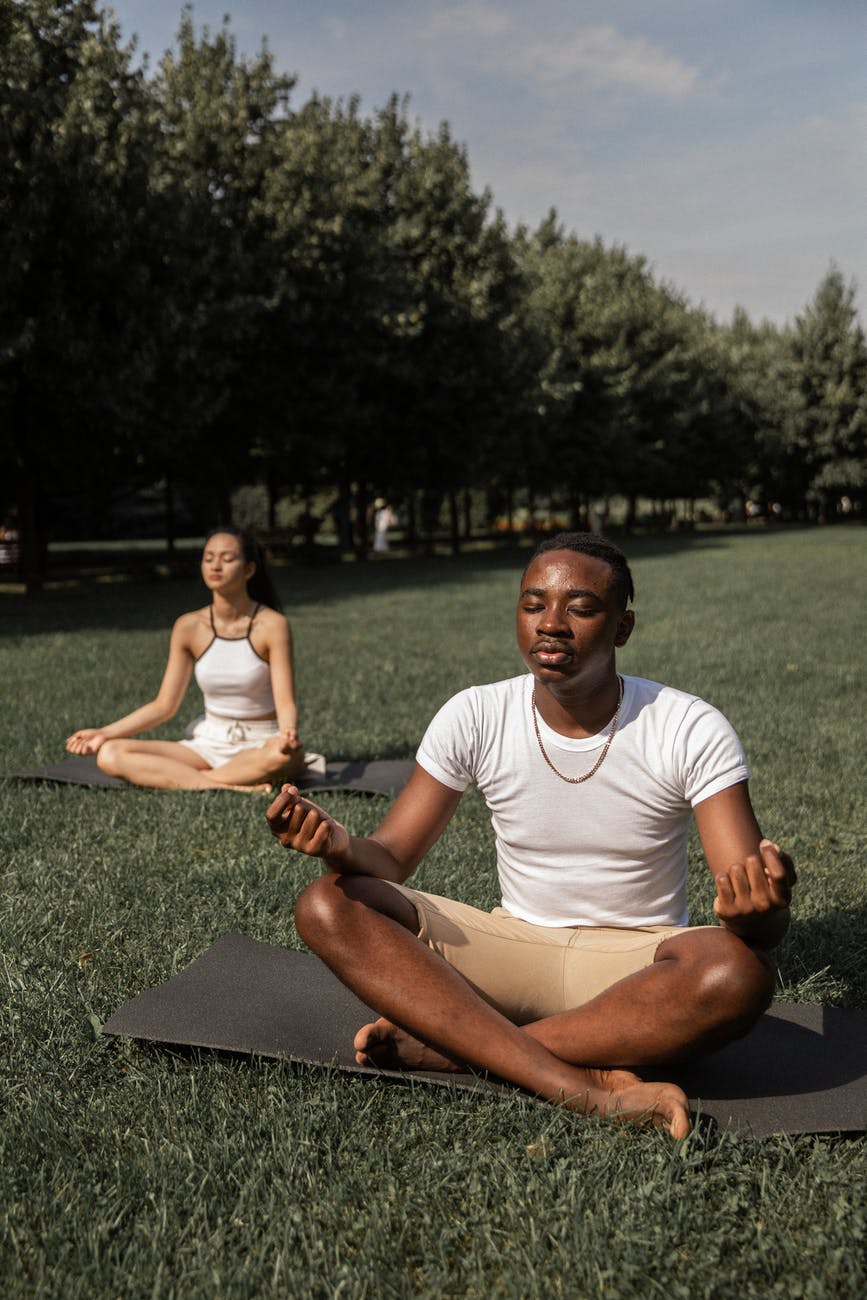
Meditation
Take a big breath of air and imagine consuming a huge gulp of stray random energy particles. Hold it for a couple seconds. Think about what you want the energy around you to feel like and imagine breathing that type of energy out in a thick gust as you exhale. Imagine the air you breathe out making a circle cloud that settles around you on the floor. Breathe in again, and repeat a few times until you can imagine all these air circles stacking up around you as far as your arms can reach made of the thick energy cloud blanket you are creating. Calm your breathing back down until it’s just gentle small breaths through your nose. Sit in your energy circle for a moment. Safe. When you’re ready, close your eyes, draw in one slow breath through your nose, feel the energy circle around you prepare for action, and when you breathe out hard imagine your energy cloud burst away from you. It leaves you as it grows and spreads and thins. Your energy spreads ripples out in all directions. It smacks up against someone outside taking a walk. Goes through some neighbors. Some trees. Some small animals. Part of your energy touches someone so desperately lonely. Someone else in pain. Someone cold and lost and hungry. A pet waiting for their person to come home from the store. Further to the woods. To the ocean. To a building full of people. Through an empty train car. It catches the winds and crosses grass fields. It blows up the side of a snowy mountain. Past some hikers and a goat. It slows and spreads apart. It settles and mingles with the breath and energy of a million other people. You. Are made of energy. Your energy touches everything around you for thousands of miles. What do you want to be sending out? You don’t need words as you think about this. Just feel the energy in your body, and imagine what you’re radiating, and what you want that energy to do in the world around you. If every particle you sent out for the rest of your life had your name on it that anyone could see, what would you want them to go and do?
This week’s exercises are cervical flexion & extensions: the balance between looking at yourself, and then outwards; down and up; foundation to aspirations; root up through crown; past to future.

Theme: I See
Acknowledging the visible and invisible world
Chapter 1: Trust & Emotions
To build a healthy stable life, we want to be able to trust the world around us. We want to rely on our body to be able to do what we ask of it. We want our feet to trust where the ground is below us, just like in the root chapters. We want to trust in the quality of our own hard work based on knowledge and experience. We want the things we see and hear to be true so that our decisions are based on reliable information, so the world around us trusts us back.
All of our beliefs and trust are built upon our own life’s experiences, and whether or not we trust something is largely based on the emotions we’ve embedded in those memories of our experiences.
Emotions are humans’ responses to our natural surroundings that help lead us to safety and protect us from harm. Fear warns us of physical or psychological risk for example, but extreme fear becomes destructive. Our emotions are linked to our survival skills, so we don’t want to turn them off altogether. But how do we acknowledge our fears or excitement and use them when needed without them taking over daily life?
Listen to what causes destructive emotion when it’s happening to you. This isn’t always fear, it could be heightened expectations for an event, or even hunger.
Stop for a minute and just acknowledge that it’s happening.
Separate the things happening around you into what you can & can’t control. Can you leave your current surroundings for a minute to assess?
Was there a trigger image or event that reminds you of a previous time this safety emotion protected you from danger, or rewarded you with something amazing? The reason it’s going off now is because at least once before it has alarmed you and it got positive reinforcement. You survived an assumed threat or got something good out of it. And it’s been doubling down ever since. The emotion embedded itself in the memory.
Decide if this emotion is still protecting you now, or if it feels overblown. Maybe kinda? The tiny spider that made you jump out of your skin isn’t actually going to cause your demise? Or the phone ringing isn’t always a harbinger of doom?
During these moments of heightened feelings, take a mental picture of your surroundings, define what triggered your strong emotional response, and talk it out with yourself after you’ve had a chance to calm down. What was really happening? What scenarios are most likely to play out? What level of emotion is a realistic response? How would you like to respond next time? Imagine yourself having a calmer reaction if it happened again. Repeat. Just like with any positive habit, repetition and time are key. Be kind to yourself. It’s hard to grow.
Emotions are part of how the brain communicates with the nervous system. The body’s deep, central, internal organs are referred to as viscera, and this communication through emotions between the brain and organs is also known as visceral messaging. Visceral (or smooth) muscle tissue lines your blood vessels, stomach, digestive tract and other organs like a protective coating on a bundle of cable wires. And although you can’t directly exercise your visceral muscles, you can provide a safe path for them with good posture, and a base level of hydration, healthy food, and exercise. All of the larger muscles along the visceral messaging system have a reactionary role to emotions being delivered, which is why this communication system is commonly known as “gut feelings”. Our brain can get triggered, and then tells our guts to react (fight or flight or freeze or relax or pass out or salivate or cry…) without us having to consider why. We have to train ourselves to add in that last part: why is this happening? Do we want to react this way? Do we want to create a healthier reaction next time?
The trust exercises this week are cervical rotations, to practice a healthy range of looking over your shoulder.
References from innerbodyresearch.com article by Tim Taylor 2015, and “The Vital Psoas Muscle” by JoAnn Staugaard-Jones

Theme: I Talk
Acknowledging our impacts
Chapter 4: Creativity & Breathing
When the throat chakra is out of balance, the way we are trying to present ourselves is not in alignment with who we are, and in extreme cases we don’t feel connected to our purpose or a will to live. Building up a safe foundation to the throat chakra level is a huge achievement. But in getting to this step we look in the mirror and realize that it was one thing to be able to communicate, and want to express ourselves, and maybe have big moments of inspiration that we want to share, but the balancing battling features that come with these traits are big too: fear of being alive; guilt that our physical chakra needs are met but we don’t feel genuine or fulfilled yet; fear that our life’s purpose isn’t big enough, or worthy, that the next levels will be too hard, that maybe we have no purpose at all and that we’ll be exposed as empty or fake to everyone if we keep trying. These feelings are an intense hurdle when we’ve never seen the other side. What if we keep going and balancing gets harder? It will. What if we give it our best and fail? That will happen a lot too.
How do we keep going? Do we recede back to the safety of the lower chakras, call it good enough, and tell ourselves never to look up again, never to look within again, never try to be more? Just maintain something that looks good enough on the outside?
Or do we stop for a moment, reassess our feelings like an outside observer, and remember what we learned in the compassion chapter about effort and rest, effort and rest. Ocean waves work their way up to crash on the beach, and then glide back to the sea. Over and over. Sit still for a moment and just breathe in all the potential energy around you. Take a deep breath. Every idea anyone could ever have, every action you could ever make is out there. Hold them in and let them crash through you. Breathe out hard. Empty your lungs. Press out the fear and the guilt to make room for all of the potential that your next breath could hold for you. The ocean tides going out take a little bit of the shore with them, and tides coming in leave new bits from the mysterious ocean behind. A wave has no guilt or fear. It takes only what it has to, and leaves something new and beautiful and broken and raw behind for everyone to see. And then repeats. Each time a little different than the last.
Breathing connects your insides to the outside for different purposes. To live. To make sound. Either way you take in your surroundings, make them a part of yourself, oxygen for your bloodstream, and breathe out and leave something else in its place. Just like we learned in the energy chapter: nothing is truly created or destroyed. But we alter everything around us just by existing. Even in death our nutrients are returned to the earth and a new plant or animal uses them to sustain life and pass it on.
It’s a bit telling which level of chakra is blocked when it feels impossible to move to the next chapter without paralyzing procrastination and imposter syndrome. Especially when the chapter is about creativity and breathing; both of which I feel like I’m pretty good at. And both of these are innate human functions in everyone that we may not always notice we’re doing. They are our body’s way of processing our surroundings, and releasing a part of ourselves, growing and continuing on.
With the throat chakra in alignment, you feel the will to live in every breath. You have more ideas than time in each day. You see so much missing from the world around us, and you feel the answers buzzing inside you waiting to crash out. You may hit some walls, but you pull back and then go, and go again. You know your actions are authentic because you listened quietly and are communicating with your nervous inner child’s voice. You respect it and speak out on its behalf. You listen to your inspiration and follow your dreams. You take a leap to create something broken and raw and beautiful to leave behind.

Theme: I Talk
Acknowledging our impacts
Chapter 3: Inspiration & the Lymphatic System
Once we have practiced some honest communication with ourselves, and maybe even tried out some personal expression, we start to tap into clairsentience, or “clear feeling”. This is our innate ability to intuitively take in information through feeling. Have you ever walked into a room or come home and felt totally relaxed and comfortable? Or walked into a different place and felt weird and jittery like your body is screaming at you to leave? Our bodies have a way of reading the room far beyond what our mind can bring words to. And kids are Way better at feeling this than adults. Kids are just these raw bundles of energy and ideas and feelings and expressions. And there’s something about growing up, and socializing, and wanting to fit into our surroundings that teaches us to cover up all that rawness. To ignore the floods of feelings we go through all day in order to appear normal, and steady, and balanced on the outside. But who is that helping? How can we feel balance and peace on the inside? How can we relearn how to trust our own instincts? What do instincts have to do with inspiration, and where does inspiration come from?
Inspiration
It’s hard to feel inspired if you’re surrounded by garbage. Garbage food, and garbage entertainment. Garbage chores that never end, and a body loaded down with a lifetime’s worth of emotional garbage we can’t figure out how to take out. Inspiration strikes through necessity (ie: ahhh what do I do?? I need to get rid of this garbage if I ever want to function properly!), or in times of rest or boredom when you are least alert (ie: what are all the thousand ways I could fill my day: the saga of a daydreamer). There are lots of expressions for this: “The best ideas always come in the shower.” “Inspiration strikes when you least expect it” is a common one. Another even more common one is “hitting rock bottom.” It’s not that you hit some day or event that couldn’t get worse. Cuz sh*t can always get worse. It’s that you stopped what you were doing just long enough to have a “clear feeling”. You felt something that made your body scream at you “no don’t do that!” or “yes! That’s what we want!” You were inspired. And that moment of clarity feels so big. You have no doubts. You know what you felt, and all your actions that follow suit feel authentic. You feel like you. You feel all the energy and ideas and emotions exploding out of you like when you were a kid. Lots of artists and writers are master procrastinators for this exact reason. If you need inspiration to strike, you can force it through necessity (ie: ahhh I’m out of time! Just do something! Start something! Go go go!) But might I suggest perhaps trying the healthier route of letting inspiration strike in the shower, rather than at the bottom of a rock you threw at yourself.
The lymphatic system is your body’s way of cleaning out it’s own garbage. Fresh nutrients are delivered through your arteries and blood vessels out to your body’s cells and tissues, and then plasma and some waste is carried back. But there’s about a 15% seepage rate of excess fluids called lymph that also includes fun stuff like fats and proteins from the intestines, excessive minerals, bacteria, viruses, and damaged or cancerous cells. (yum) Lymph nodes are scattered all over your body along the lymphatic system, and they attempt to filter out the damaged or cancerous cells in lymph. They also create the immune system’s cells (like white blood cells) that attempt to fight off harmful bacteria, viruses, fungii, etc… before it all gets returned to your regularly circulating bloodstream to maintain blood pressure. Some lymphatic organs that probably sound familiar are your spleen, appendix, bone marrow, tonsils, and adenoid. They’re all doing their best to filter out the garbage and keep you running. Some things you can do to make their job easier: avoid consuming or breathing in harsh chemicals, cleaning products or pesticides. (hello 2020’s mask collection) Drink lots of water to keep that lymph-sludge moving along. And move your body.
This week’s posts are different types of lymphatic massage you can do at home. It’s best to do them in order from the chest working your way out, always pressing in an upward motion to follow the path of drainage. It’s also important to drink lots of water, and if you have any history of blood clots or cancer to consult a physician before performing lymphatic massage.
An example lymphatic massage from start to finish
Resources this week from: Unimedliving.com and ClevelandClinic.org

Theme: I Talk
Acknowledging our impacts
Chapter 2: Expression & Posture
How is expressing yourself different from communicating? Well for one, communication implies information has transferred correctly from a source to a receptive audience. This can be in the outside world, such as telling someone to meet you at a location at a certain time, and they confirm they understood you. Or it can be your own internal communication, such as your mouth telling your brain it’s a little dry, and your brain telling your body to get up and drink some water. Expression implies reducing a large quantity of something or a big idea down into a quick, obvious burst, regardless of an audience. I’m a fan of cocktails, and I love the term “express the garnish” where you cut a tiny, beautiful piece of citrus rind, and twist it or squish it juuusst right so that it sprays out an oily aromatic plume of itself that gets all over your fingers and your drink. Even if you throw out the rind afterwards, you can tell it was there. It’s left its mark.
When the throat chakra is out of balance, it’s damn near impossible to speak honestly about our feelings or desires, or to expose any vulnerability. We feel silenced, and we deeply fear judgement for anything we might do that would draw attention to ourselves. We hunch down and hide ourselves. If we can’t be perfect then we shouldn’t try at all. There’s a paralyzing fear of unknown consequences, with or without a reason. But remember: expression doesn’t have to involve communication, a receptive audience, or any audience at all. It could just be a great big feeling you reduce down to a quick, obvious burst. It can be released in your words. Or it can be art, or your actions, activities, cooking, clothing, hair, tattoos, nail polish, a bumper sticker, decorating your house, or driving out to a canyon and bellowing primal screams. When you can’t express yourself, you may feel like you’re living with a lump in your throat. You want to say something, but choke on your words. And when they can’t come out you might cry or yell or panic-spiral or throw things instead. You block your desired expression, and less desirable ones burst out in its place. So if something is going to present no matter what you do, what do you want an expression of yourself to be?
“People act two different ways when they are hurt. People who cover up and hide the wound and let it fester. People who show their wounds and grow like trees.” – Love Alarm, Season 2 Ep. 3
This week’s stretches are all about posture. Go drink a little water, put your face out in the sun, plant your feet steady on the ground, and grow.
Posture part 1 – laying example

Theme: I Talk
Acknowledging our impacts
Chapter 1: Communication & Shoulders
If the first three chakras were the base of Maslow’s pyramid where we’re living just to meet our base deficiency needs, and the central heart chakra is where we learn to listen to our own personal goals, then the throat chakra is where we move into personal growth. We all want to feel like there’s somewhere in this world we belong. Whenever we find something we like that makes our soul happy, or go somewhere where we fit in just right, we can’t help but want to talk about it, share it, everywhere all the time, and learn all we can about it. To absorb it and make it look like a part of ourselves. To wear it on our sleeve, so to speak, or a t-shirt. If we love it and it makes us feel so good, then surely if we talk about it all the time, everyone around us will feel good too, right?…and be just as excited as us? …all the time? …and love us? …and want to be around us more?…maybe? maybe not?
Communication
Just like we talked about in the Love chapter, you are not made of the objects you love. Who you are doesn’t change based on what you own, or like to talk about. And your personal identity is not defined by others’ reactions, or by the things they like, or like to talk about. Your interests and those of other people around you will change over time and through all that, you’re still the you you’ve always been. You are a solely unique and independent entity from everything around you. You don’t have to say anything to make that more or less true.
There is a difference between being capable of communicating, and having something to say. The world is full of voices: people, birds, whales, coyotes, commercials, talk shows, and shock-jocks…all trying their best to tell anyone that can hear them about something they feel is important. They want so desperately to be known by the words they speak. And it is easy for us to repeat things we hear. Especially things that get attention.
It is hard work to feel your own value in your silence. It is hard work to block out all of the outside noises, and all of the inner dialog stuck on repeat, to hear your own true authentic voice. Meditation and self reflection take practice, and meeting yourself can be scary.
After your stretches this week, spend some time in silence. Listen to how your body feels. Has it been trying to tell you something while the roar of the world was drowning it out? Try to hear one thing it appreciates, and one thing it would like to ask you to improve.
YTWL, static and dynamic variations

Theme: I Love
Acknowledging our choices
Chapter 4: Acceptance & Your Upper Back
For chakra healing, physical healing, or strength training, no matter what your goals are, the whole process is an inner exploration of knowledge. You can’t speed it up, you can’t skip the parts you don’t like, and there is no finish line. You don’t stop just because you reached a place you thought you wanted to get to when you started. You don’t run a marathon and then hack off your feet. You don’t reach your weight loss goals and instantly start binge-eating sheet cake a la Tina Fey on Weekend Update. Because you learned so much along the way, and you know what energy kcals that cake costs. Your actions have a value. Your goals have a value. Neglect has repercussions you’ve felt before. And at some point you come to a place of peace with that. Transformation takes patience and never truly ends. Your road will be bumpy. Be compassionate with yourself.
Acceptance
Just as we want to reach inner acceptance with ourselves and our own journeys (as hard as that is), we still want to feel accepted by the world around us. We want to fit in and be appreciated. We want to share our journey with other people that understand where we are at. The first and easiest action is to surround ourselves with only people that already agree with us and give us praise, and for us to shame or lash out at any signs of conflict. And when we go back to our safety circle who rewards our actions, we feel justified and the cycle intensifies.
But not all praise is good for us. And not all conflict is danger. Not everyone who loves us is good for us. Personal growth is hard, and not all our loved ones will take the same path as us at the exact same time, or understand our choices. You will lose some people you love over the choices you make, be it short term or permanently. For good or bad. And vice versa. And that is what it is. It’s ok. It’s all a part of new growth.
Below in the comments are some strengthening exercises and stretches for your upper back that remind me a little of flying. It’s hard on our human bodies to be these heavy, flightless birds. Our backs can get tired from carrying the weight of our own world all the time, but they can also pull us through the water when we need to swim to safety. If we try to take good care of it, it can try to take care of us too.

 Jet Tries