Section 4.3 Your Heart

Theme: I Love

Acknowledging our choices 

Chapter 3: Compassion, Caretaking & a soft heart

Sometimes it feels like our whole world fits in the circle of our arms. We hunch over to type on the computer. We lean over a table to work on a hard project. We huddle over a warm cup of coffee in the morning. We carry a heavy object up against our chest. We hug our family, or lug an overtired kid to bed, or cradle a baby. We scoop up the cat to snuggle on the couch. A ton of our lives happens in a very small circle of space pressed up against our hearts, and there is a lot of intense energy trapped in that space. It is the bridge between our whole life’s physical demands and all of our emotional aspirations, like we discussed before. So we can either let all that effort and energy weigh us down and break us over time; or we can drop everything entirely and walk away; or we can acknowledge and use what we have to make us stronger.

Compassion

Caring for others, and about others, and taking care of our own needs is important, and relentless at times (we’re all looking at you laundry mountain), but it’s also important to set it all down, take a deep breath, and prepare to begin again. Go ahead and let compassion define you at times, but if you give everything of yourself like Shel Silverstein’s Giving Tree, there will be nothing left for yourself or anyone else in the end but a sad stump. So hold still for a sec. Set down what weighs on you. Plan out your next sets. Do your reps. Listen to what your muscles are telling you. Should you increase the weight next time or take some off? In what areas of your life do you have room to grow more compassion? Where in your life are your muscles yelling at you to set something down, to reassess, realign your posture, or find a better grip? If some part of you is yelling “there’s got to be a better way!!” …then there probably is. But just as it was you who discovered a problem, you have to discover your own answers as well. Just try something. Try and fail. Try something no one else would try. It’s ok. Failure is ok. And it’s ok to be consumed with compassion. But you are a someone worthy of compassion too. 

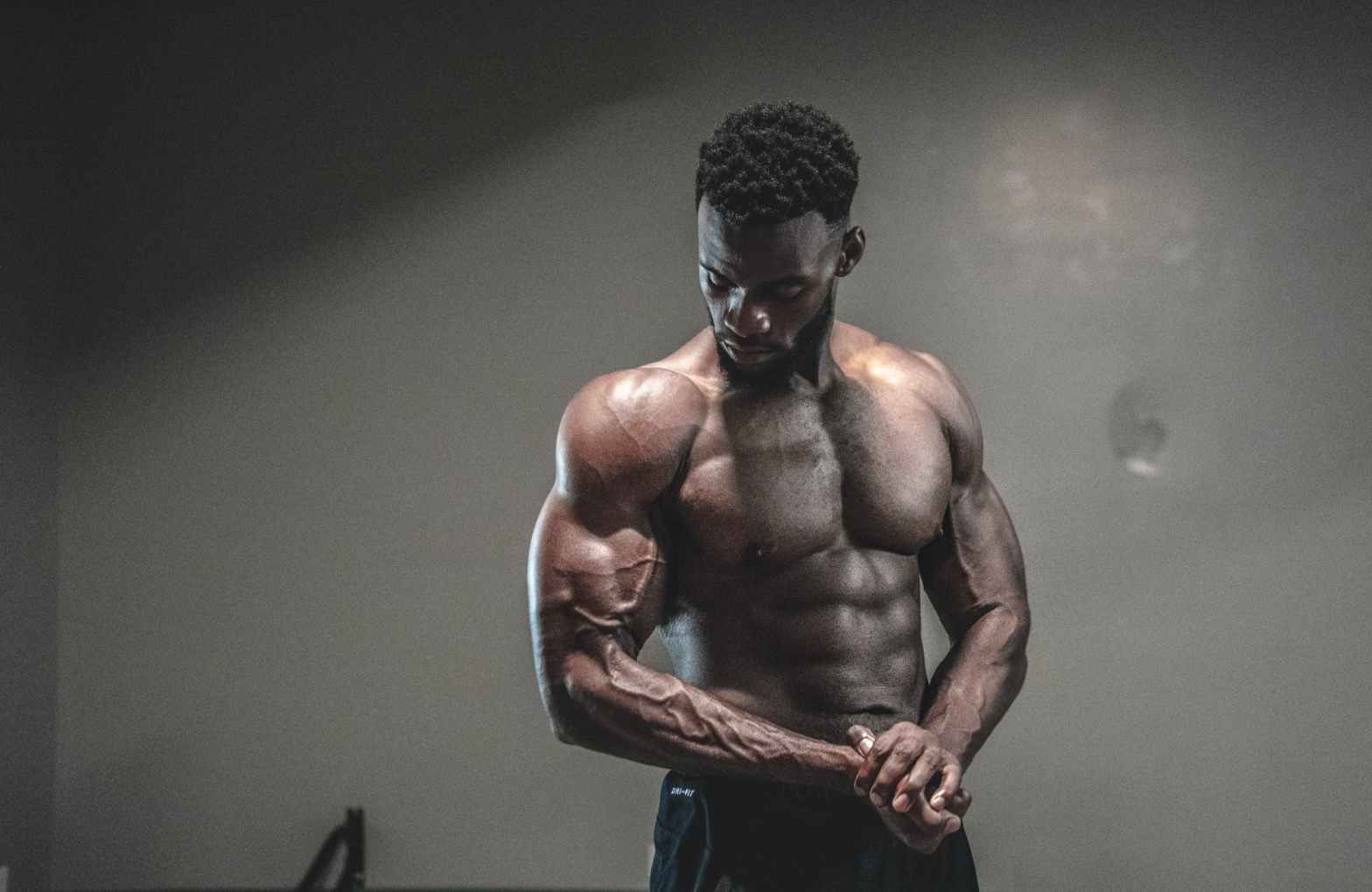
Below are some chest and pectoral strengthening exercises. Think about the pattern of effort and rest, effort and rest, like waves working their way up to crash on a beach, and then gliding back out to sea. There can’t be one without the other. One action isn’t good and the other bad. We have to do both so as not to become a sad stump. 
Door Jamb Stretch

Leaning Corner Hold

Double Arm Abductor Stretch

Dumbbell Bench Press

Section 4.2 Your Heart

Theme: I Love

Acknowledging our choices 

Chapter 2: Sincerity & Visible Growth 

The heart chakra is where we first attempt to get in touch with our higher self, and how that goal being relates back to the rest of the world. How who we are might fit in the universe. But how do we build this bridge? And how do we talk ourselves through the process, or explain what’s going on to anyone else without sounding braggy or begging for attention? I have a pet peeve when people repetitively talk in soundbites and canned phrases. It makes me feel punchy and not want to be around them because to me that feels fake. But do any of us really have original thoughts or expressions? Aren’t we but an amalgamation of our surroundings and experiences? (sorry, I know lots of people also have pet peeves with blow-hardy windbags who use unnecessary giant words, so I had to roll with it for a sec) But you get my point. How do we come across as sincere? 

Humans are a social creature. There’s safety in numbers, and we want to fit in and belong to a pack, or group, or some kind of family structure. We all have varying skill sets, support each other the best ways we know how, and rely on others to make up in areas we lack. But we also feel really good getting recognition for our skills and hard work. It’s absolutely okay and healthy to celebrate your own victories, but there is absolutely a line between being proud of a job well done, and not knowing when to read the room and can it. 

Sincerity

Trust that your actions are visible. Be it good or bad. If you’re putting hard work into your body and your mental health, people can tell. You can tell which of the people around you work hard to take care of their own and/or their family’s basic needs and have a solid support structure, and which ones look like they’ve been falling apart and self-flagellating for years. No one has to talk about it. You can feel it. When you see someone on a path of self-improvement that you want to be on too, you ask them about it right? And odds are they would LOVE to talk your ear off about it. And you’d be receptive because you approached them with interest and acceptance and are ready to learn. In this way, slowly, people join and grow a like-minded community of support and belonging that their heart was aching for before. When you let your pack grow organically rather than attempting to beat people over the head who weren’t receptive, you’ll find a level of sincerity and peace without the ache for more and more praise and attention that never felt good enough before.

Unlike some of the other more commonly injured muscles, we don’t really baby our biceps and triceps. We’re more like “show yourselves you jerks!” We work them hard, we take them out to the gun show, and we mock them when they’re not in good shape. So this week’s stretches are going to have some more strength training mixed in. Let’s see some #gains.

Biceps Stretch

Triceps Stretch

Dumbbell Curls

Pronated to Supinated Curls

Triceps Wall Push Ups (and mods)

Section 4.1 Your Heart

Theme: I Love

Acknowledging our choices 

Chapter 1: Love & the Identity Battle

The lower 3 chakras are considered the physical chakras that ground us as humans onto the earth. Like the base of Maslow’s pyramid we feel their weight. The upper 3 are considered the spiritual chakras that have more to do with our desire to fulfill our own potential and connect to something bigger than ourselves. The spiritual and physical chakras are bound and bridged together through the heart chakra. Ever feel like your physical demands and your personal goals are tearing at you in opposite directions? Well the heart is this battle’s home base.

Love

It’s covered by philosophers and poets, religious texts, movies, musicians, and everyone in between. How to love, what to love, when and who to love, how many people can you love at once, how many people can you love over time, can those loves overlap, how do you show love, and how not to, how to know if someone else loves you too, and how to know when someone else loves you but can’t show you. How to know when someone you love doesn’t love you, and what that means for you. What do the people and things you love mean about you? What happens when any of these things change? How are they different based on local cultural norms or geography? Or nature vs. nurture? 

We don’t each exist in a vacuum, and love isn’t a quantifiable object, which keeps this topic so fluid and interesting throughout the whole freaking span of human history. There is no right answer everywhere for everyone forever. The only constant is people. Physical people grounded to the earth with thoughts and desires and feelings bigger than we can comprehend. Our senses take in a beautiful sight or a wonderful smell or a strong hug, and our bodies make serotonin, oxytocin, dopamine, and endorphins. And all these happy hormones flood our brain, and we feel good, and we want more, and so we attempt to fill our lives with these signals that bring us “love”. 

The people and places, memories, objects, or hobbies that you love will continuously change, and wax and wane like the moon. Some change the more you learn about them, some grow or dissipate with time. Who and what you love is entirely you. You are the beginning and the end of you. Your actions in a society will have reactions, that’s just physics. But you are a solely independent entity from anyone who may or may not love you. You are not the objects you love. Your identity doesn’t change based on what you own. And your identity is not defined by others’ reactions.

While doing your stretches this week, let your mind wander over specific memories that you felt a love for something, or someone, or somewhere. What did it feel like? What people, or places, or objects do you think you cling to because they boost your happy hormones? Can you tell that some of those things have changed for you now versus when you were younger? The following exercises focus on grip and release using our forearms and wrists. How can you safely hold onto the things that are important in your life?

Forearm Stretch

Forearm Wall Stretch

Wrist Roller, at home mod.

Dumbbell Wrist Curls & Extensions

The Plate Pinch, at home mod.

The Towel Hold, at home mod.

References this week from Atlas Biomed.com

Section 3.4 Your Solar Plexus

Theme: I Can

Acknowledging our inner skills and strengths

Chapter 4: Determination & Endurance

As your lower Root, Sacral Plexus, and Solar Plexus Chakras find balance, you build up some trust. You get a feel for what your body is capable of, what hurts it, and what may need extra attention. But through the endless repetition of physical therapy stretches you’re also teaching your body to trust you back. It learns what’s expected of it, which ways your parts should bend, and where they should be held to maintain healthy posture. With enough repetition we eventually reach the point where we’re forming good habits that have become second nature. We don’t have to try sooo hard to remember our stretches or have to pep-talk ourselves into exercise anymore. They’ve become a muscle memory that’s just a part of who we are now. The repetition has proven its results, and the memories of pinched nerves and sprained ankles are enough of a deterrent to never want to go back. 

Endurance

There is a human psychological need to achieve a feeling of accomplishment. It’s why video games and those bubble-pop phone apps are so fun and addictive: at set intervals of time you clear a row or unlock a new level, and boom: easy endorphins. And it’s why it’s so hard to start new healthy life habits. They take quite a while to reach endorphin status, and there’s no obvious reward doled out to us with every session. So the secret to unlocking your own determination to make those healthy life choices, and find the endurance to stick with it indefinitely is:

1. Figure out what reward your soul really yearns for. Mine is definitely not aching to reach level forty-whatever of Splash fish tank on my phone. Yours may vary of course. Personally I want to mitigate injury, pain, and sickness first. Next I want my body to function when I need it. I don’t want to turn my head while driving and pinch my neck. I want to be invited to activities, and not have to turn them down because of my health if I can help it. And I want to fit in the clothes I already own, because jeans shopping is time consuming and annoying to me. (I can be talked into shopping when buying smaller clothes as needed). Sometimes your reward may be a vacation or a holiday you want to look good for, or not miss out on. These are short-term goals, but if you string enough of them along you can ride that for a while. Like I said, all rewards vary by user. Eventually our goals can grow to become someday experiencing the depth of who we are and what we are capable of. To learn and live our life’s task or achieve our soul’s purpose. But for now let’s start the bar off a little lower. Like with pants.  

And then there’s part 2. Enter a calm, relaxed state where you can separate your excuses-mind from your physical body. And then tell your body you’re going to repeat your stretches, exercises, or other healthy life choices until they become second nature. That’s it. No bribery with rewards from step 1, because that opens the door for debate and excuses-brain to chime in. Just take a breath, speak from your mind and talk to your body as if it was a different entity, and tell it what to do. You know what’s best for it. You’re only looking out for its own best interest. 

In the exercises this week you can choose from endurance based holds, or try some other cardio or fitness-based hobbies or sports that you actually enjoy. If you were going to incorporate physical activity into your day, every day, for the rest of your life, which ones sound the least like torture, and start there. Maybe you like biking or running or HIIT videos on YouTube. Maybe you like raves. Choose your own adventure. It’s your life. Be authentically you. 

Plank

Break Dancer

Shake it with Shaun

Section 3.3 Your Solar Plexus

Theme: I Can

Acknowledging our inner skills and strengths

Chapter 3: Personality & Side Obliques

Oh side obliques: the other abs. In the first two sections we focused on building a strong reliable foundation for our body. As we move up to the middle you’ll start to notice how interconnected everything is, especially when one part is sore or injured. Working on your abs involves your lower back, and your back might over-arch if your hips are too tight, or your shoulder might hurt if your spine is crooked because you’ve been limping on a sore foot for a while. It’s common that pain symptoms don’t present where the original injury is. And it’s also common to forget to take care of the not-squeaky wheels in life. Sure deadlifting heavy stuff at the gym looks impressive, but dependable side obliques make it so you can twist and lift a snow shovel when you need to, or rake leaves, or unload 100 dishes or bags of groceries at a weird angle without being bed-ridden the next day. 

Personality

Our own special blend of personality characteristics (and how they present or may change each day) are also highly interconnected. They’re rooted in the previous chapters: how safe and stable we feel, if we have the ability to recharge, if we have a place for comfort, if we’re in touch with our senses in the present moment and our own personal flavor of sexuality, if we can discern between what feels good or bad and what’s beneficial to our wellbeing, if we feel connected and important in our social setting. Each of these steps allows the next layer to function. The solar plexus can’t feel powerful and strong or provide a safe place for your personality to shine if the foundations below are in shambles. Otherwise our personality just comes across as bitter and irritable. Like we’re walking through life with 100 grocery items in our arms and no bag and everything hurts. And that’s not truely who anyone’s personality is. That’s the symptom presenting apart from the original injury. 

This week while doing your stretches, reflect back on some of the previous themes and muscle groups that may feel out of alignment still. Some side obliques stretches involve whole-body torque, while others isolate in tiny motions. Be careful and move gently. See if you can feel how each muscle is connected to the next, and if any feel like they may want some extra attention this week.

Seated Russian Twist

Bird! Squirrel! (aka apple picker)

Standing Side Stretch

Weighted Side Bend

Section 3.2 Your Solar Plexus

Theme: I Can

Acknowledging our inner skills and strengths

Chapter 2: Power & Your Back

When our solar plexus chakra is severely out of balance it presents in one of two ways, that both essentially mean the same thing. 1. We feel a deep seeded need to dominate and control our surroundings and other people, a desire for more prestige and constant praise, and we work tirelessly to keep up the best appearances, but nothing is ever truly enough. Or 2. We manifest self-hatred and tell self-deprecating jokes to the point that everyone around us feels uncomfortable. We give away all power to others to shirk any responsibility, but are left with no sense of self. We don’t respect ourselves and can’t imagine anyone else ever could either. Both are just opposite gut responses to feelings of inadequacy. Balance is a funny thing. We want it. We know we need it. But it’s ridiculously hard to achieve that perfect middle where we’re not teetering into court-ordered-anger-management territory or severe depression. And it takes focus. 

Power

For most of us our real life goal isn’t to be the King of the effing Planet or the Bestest Whipping Boy martyr that ever was. We just want to feel whole. We want to feel content in who we are, know who we are and what we stand for, and cultivate our own internal self-worth in healthy ways. We want power and control over our own person, in its entirety, at all times. And that’s a big task. Next up are some questions to consider to help you feel a little more centered. Don’t think too hard on all of them, just let whatever comes to mind float around and marinate a bit while you do your stretches. 

What is a hard task or a battle you remember going through that made your inner warrior feel satisfied?  What’s one behavior that makes you feel proud of who you are?  What good inner qualities do you hope others see in you?  What is it exactly that you want to stand for?  There are thousands of big-ticket items like climate change and humanitarian efforts that get overwhelming fast, and it’s impossible to give adequate attention to all of them all the time, but personality-wise, how could you use your own powers in your world for good?  What could you do to have just a little more control over just your own life for a day?  What’s one thing you could change when you consider that every individual around you (coworkers, relatives, kids) also crave the same self-autonomy that you do? 

Below are links to some nice back stretchies. While you work out today remember: “You is smart. You is kind. You is important.” And there is more power within you than you know.

Superman

Lower Back Rotation

Crickets

Hyperextension

*quote from Aibileen Clark in The Help

Section 3.1 Your Solar Plexus

Theme: I Can

Acknowledging our inner skills and strengths

Chapter 1: Strength & Abdominal Muscles 

Everyone is amazing or the best at something to somebody. Whether they know it, or are able to believe it, or not. I knew a guy briefly over the years who had a lot bad happen to him and around him. And he no longer found value in life last year, and so he left his. Willingly and with clear eyes. I don’t fault him, and I’m sure there was nothing I could have done to change his mind. I was barely a blip in the saga of his life, but he always stood out in my memories as just unbelievably kind, and, like, so cool cuz he was a couple years older than me in high school, and had lots of friends, and played sports and had the nice muscles to go with that. And what kinda guy like that in high school was also a nice, friendly person? I was fortunate enough to get to spend some time with him again later at our 10 year reunion, and man that guy gave the best hugs. Just these full bear-hug, lift-you-off-the-ground, doesn’t-see-your-faults, just cares about you, giant hugs that make all your troubles drift away. I was really looking forward to my 20 year reunion, and hoping to see him again for a day played a part in that. And when covid hit, and plans started getting cancelled, life started taking more and more effort, and more plans got cancelled, and the reunion was cancelled, and then news of his death made the rounds, I wished more than anything I could just tell him that his life was a bright spot in my memories. That he mattered to me. That I still desperately crave his hugs. 

Strength 

A huge part of our self esteem can get wrapped up in our appearance. What we think other people see in us. Our six-pack goals and photo shoots with perfect lighting. I don’t know that any of us ever fully stop feeling like that nerdy freshman that really appreciates one cool older kid being kind. So if I choose to work hard to build up my core and have super strong abs, I’m going to do it so I can pass along what someone else gave me until he couldn’t give anymore: the world’s best fucking hug. 

Below are some different ways to take care of your core. Whether any of us ever see the effort of the six-pack underneath, we all know the strength it takes to keep on trying. 

Crunches

Reverse Crunches

Bicycle

Section 2.4 Your Sacral Chakra

Theme: I Feel 

Acknowledging our need for connections 

Chapter 4: Sociability & Hands

Our hands, like our feet, are another one of those overworked, overlooked appendages that get no attention until they start screaming at us when they’re injured. And then we bemoan our plight while we hobble around on crutches or curse our bandaged unusable finger while it heals. Just to go back to life in the shadows once it’s working again properly. But our hands are seriously amazing; they do thousands of tasks all the time without any conscious effort. You can pull up your blanket when you’re cold, or move your cat off your face, or scratch your butt if it itches….in your sleep! You can point an angry finger, or punch, or throw something without even meaning to. I mean that’s all just bizarre. We teach our hands how to do something once like how to type or use keyboard shortcuts, or play an instrument, or chop food, or hold a cigarette, or grip a bat, or read braille, or braid hair, or steer a bike, and with minimal to zero maintenance our hands retain those muscle memories for life. But because the effort isn’t conscious anymore, we forget to stop, listen, and care for them before they hit burnout and leave us in the lurch cursing our misfortune. Really the same is true for all of our body parts. And all of our social interactions.  

Sociability

Touch is a huge factor for social beings. Different families, cultures, and locations may have different comfort levels with hugging, kissing, or shaking hands, but our bodies crave the connection, and go into an angry panic state when it’s missing for too long. A newborn’s breathing, temperature regulation, digestion, circulation, sleep, dopamine levels, and quieting panic/anxiety queues improve when they’re held. The same holds true for spastic toddlers and stressed out adults. There can’t be a monster under your bed if your dad is sitting by your side. Your fever will get better soon if your mom puts her cool hand on your forehead. Next weekend will feel good because I’ll get to sit and chat with a friend. Nothing’s actually changing. It’s the social interaction that’s soothing you. It’s as vital to our health as any other basic need, and our systems can’t function their best without it. 

Sit still in a quiet place for a moment. Listen to your body’s needs right now. Does it have some food and water? Does it have comfortable shelter & clothing for heat or cold? Does it feel safe and clean? Is your mind and your body being worked, and given rest breaks and sleep? Can you see or touch or talk to other people in your social structure? Can you improvise with a reliable pet during an endless pandemic? Do you have a safe quiet place where your body can be alone to tell you it’s troubles? 

Below are some stretches to give your wrists and hands a little TLC. They have to take in a lot of information and hold on tight to a lot for us all day. Let’s give them a chance to release and let go. 

Wrist Flexor Stretch

Wrist Extensor Stretch

Finger Stretch

Thumb Stretch

Section 2.3 Your Sacral Chakra

Theme: I Feel 

Acknowledging our need for connections

Chapter 3: Pleasure & Pain (ie: Foam Rollers)

It might seem odd that the last two chapters on sensuality and sexuality didn’t have anything to do with being with other people, especially in a section that talks about our need for connections. The process of awakening each of your chakras, slowly, …and methodically, …is an opportunity to listen to your own body, not anything else. Breathe. What do you feel? What feels good? What hurts right now? What connections have you maintained this last year? How were they important to you? What connections or priorities have you lost hold of in the last year? Which of those lost connections make your gut feel heavy when you think of them, and which ones have made you feel lighter? What is something small that you might like to change this week? 

Connections

If you’ve never heard of a foam roller, it’s pretty much a giant hard pool noodle that you roll yourself over to loosen up soft tissue adhesion and apply pressure to your fascia; that’s the connective tissue that surrounds all your muscles, bones, organs, and blood vessels all over your body. Our muscles are always in a constant process of breakdown and repair. They’re supposed to do that. They atrophy if we don’t give them something to do, and they can’t repair after hard work if we don’t feed them protein and fresh water. But exercising our muscles also causes the surrounding fascia to thicken to protect them while they’re mending, which is that sore, stiff feeling you might get the day after a good workout. Myofascial release (especially with foam rollers) stretches the fascia back out to increase your circulation, improve mobility, and decrease that next-day soreness.

Some Tips:

Don’t press on an area that actually hurts or is injured. This should all feel like a hearty massage, not torture. Go slow, like rolling out cookie dough. It should take about 10-15 seconds to go from the base of the muscle to the end. Massage muscle groups, not bones. You’re not trying to pop a vertebrae here. And maintain good posture. You’ll want to keep you back nice and straight (when doing any exercise really) by tightening your abs, and keep your shoulders rolled back and locked into their sockets where they belong. 

You know what time it is: stretchy time! Typically I’m too cheap to actually buy gym equipment if I can find something around the house to serve the same purpose, but one foam roller and maybe a yoga ball offer you a lot more stretching opportunities for the $20 or so they cost you.  Below are some different foam roller stretches that hurt…so…good. 

Rolling Glutes Stretch

Rolling Hamstring Stretch

Rolling Iliotibial Band Stretch

Section 2.2 Your Sacral Chakra

Theme: I Feel 

Acknowledging our need for connections

Chapter 2: Sexuality & Your Hips

When we have difficulty expressing or admitting our feelings, or can’t attain the pleasure we think we want, we end up holding on to unprocessed anger. We clench our legs together so no one will see our vulnerability. We feel stifled and resentful that our ideas aren’t materializing in the world the way we think they should. A lot of these feelings can be subconscious and just randomly burst out in fits of crying or destruction. Like a baby who hasn’t figured out how to get the spoon of food into their own mouth, or the square block to fit in the round hole. What you want and what is happening doesn’t match, but we’re so obsessed with the hyper-focused view of our dilemma that we can’t see the bigger picture. As we get bigger and our dilemmas become bigger than “why doesn’t my brand new chubby hand with tiny fingers hold this baby spoon” or “why doesn’t this square peg fit in this round hole” and they become things like “why doesn’t my relationship now match what my uncommunicated subconscious expectations were in the beginning,” or “why does my personal idea of sexuality not match what I assume other people’s expectations are of me,” etc… 

These disconnected expectations leave us with unresolved shame that we don’t know how to fix, and often materialize by trying to control something else, like an obsession with possessions or money; never having what you feel is enough, and lashing out at other people that look like they have more or look like they are happy with what they have. Or feeling shame in having more than other people, but it still doesn’t make you feel like you achieved what you wanted, and it’s not making you feel happy and secure like you thought it would. These obsessions swing one of two ways: we place an overemphasis on obtaining material goods (like hoarding, followed by regret, but still not being able to let go because you don’t feel “done”), or not being able to own your own abundance (shame, self-deprecation, and sometimes intense purging or consuming yourself in caring for others to take your own focus off of yourself). 

Then what am I supposed to do?

Baby steps. Think of someone or somewhere safe you can tell a tiny need. Or write it down first. Let it leave your body. Then try telling someone you know and trust a little secret you’re holding in. Odds are someone that your secret doesn’t affect won’t be surprised or care one way or the other. Which is kind of freeing. Ever noticed how it’s easier to spill your guts to a stranger, or not look people in the eye while you confess things (like at night or around a campfire or on a long walk). Find a way to let some of your secrets leave your body. Odds are someone out there feels the same way you do (hello, the internet). But just admitting that you want or need something can be really scary if you’ve been holding something in for a long time. Some people write confessions or desires on a tag inside a balloon or on a paper boat if the fear of seeing someone receive your secret is too much. Not all our secret desires are bad or evil or uncouth. But also, not all of our secret needs can or will be met. The square peg will never go in the round hole, but if you step back you can see that the world is filled with unlimited shapes and sizes of everything. 

So you don’t have to tell me, or anyone, your secrets. But admitting them to yourself, allowing your body to process and release them outside yourself at least gives you the option to move to the next step and decide “Is each of these secrets something I want to hide and cling to and hold on to forever? Is this thing something I still want, or was it something I used to want and don’t care about anymore? Is it just something I think I was supposed to want? Is my desire based in reality, or just a fun story I tell myself? Is it hurting anyone or myself?” Wants, needs, desires, and sexuality are incredibly complex and interwoven and we’ll probably never untangle them all. Give yourself some room and time to mentally step back and process them without shaming yourself, and resolution will come to you. Maybe it’s time to stop hyperfocusing on one peg, let it go, and look around to see all the other options around you. Zoom out. Try something new. 

Stretchy time. It’s pretty much impossible to do hip socket stretches without feeling a little ridiculous and vulnerable, but this week is all about slowly practicing becoming more comfortable with being vulnerable. So you don’t have to start out doing high-kicks in your sparkly Richard Simmons outfit down main street, but with a little practice, maybe we’ll all get there some day and not take ourselves so seriously. 

Try some of the awesomely awkward hip socket stretches below.

Hip Hikes

Hip Bridges

Hip External Rotation

Half-Kneeling Hip Flexor