Section 2.1 Your Sacral Chakra

Theme: I Feel 

Acknowledging our need for connections

Chapter 1: Sensuality & Glutes

The last chapter was about being the lap for others, and wanting a lap; ie: the safe place to stop and rest for comfort. This one is about being the little spoon. Being the receiver of snuggles and attention, and touch, and being taken care of in the present moment. While still being aware of how much power your glutes have stored in them. You are your own individual, and you choose when to feel or use your own power stores. We can want a safe place to be protected, and simultaneously still be strong. In the energy chapter I talked about how your primal Kundalini energy is stored at the base of the spine. You can feel that stored energy when you need it, if you’ve ever bolted at the start of a race, or done any horse-kick style exercises. 

What makes you feel protected? What makes you feel strong?

Sensuality

Being sensual has more to do with being present and aware of all your senses than it does with anything overtly sexy. For example you can slowly, sensually, cut a slice of banana bread while gazing out a sunny window in the morning alone, then take a sip of fresh hot tea and feel the steam warm your face. Your toes are chilly against the cool floor, but you’ve got your favorite fuzzy jammies on, and they feel soft and comforting against your skin. 

One of those common self-help tricks involves hyper-focusing on your present senses to pull you out of anxiety attacks or repetitive self-talk loops. You hold still, slow your breathing, and name 5 things you see right now, 4 things you hear, 3 things you are touching, 2 things you smell, and 1 thing you taste to pull your mind back into your present body. 

The next time you feel adrift in your own monotonous daily route, or like everything is suddenly spinning out of control without you, hold still, slow your breathing, and hyper-focus for a minute on your own sensuality. 

Below are some different ways to work out those glutes; great for snuggling, and kicking ass. Just like you. 

Seated Glutes Stretch

Face Down Leg Raises

Door Jamb Squats

PT Clams

Side Lying Hip Abduction

Section 1.4 Your Roots

Theme: I Am 

Acknowledging our base level of existence

Chapter 4: Comfort & Thighs

A certain someone I know once told me, as far as physical body parts go, “There’s no such thing as a soul, or lap. I can point to my foot. I can point to my eye. But you can’t show me an anatomy diagram with a soul or a lap on it.” And sure that might be true that neither is a single labeled element, but I would say that’s only because they are made of a combination of physical parts and emotional concepts. A lap is a combination of femur and pelvis bone with a bunch of quad, glute, and hamstring muscles, veins, and skin on a person sitting at a roughly 90 degree angle, combined with the idea that this location can provide emotional support and a calming effect if it’s a trusted lap. (see: sleeping cats, babies, and significant others) Or it can cause distrust and tension. (see: any person you don’t want to sit on, and every kid on Santa) I would say it’s the same with a soul. There are lots of lobes and crap in a brain that control our personality, memory, behavior, impulse control, etc… that generally make us unique, but when those parts are combined with the idea that we can use them nonverbally to provide emotional support, a calming effect on those around us, or cause significant distrust and tension, that’s the soul. It’s nothing we say or do in particular. It’s the combo of how we behave and the energy we put off. 

Comfort

Who and what around you makes you feel safe and comfortable? Who and what around you may make you feel too protected, or smothered? Who and what around you makes you feel unsteady? Is it an exciting unsteady, like a new career or love interest or a big move? Or unsteady like hearing someone breaking into your house? 

What can you do to build a safe, comfortable lap? What can you do to ask for space when you need it? What can you do to minimize things causing you dread? What can you do to show appreciation to the people or places that make you feel protected when you need it? What can you do to be a safe haven to the people around you? 

Below are some different ways to stretch & strengthen your thighs and quads (ie: your power lap). Working these muscles is in no way comfortable, but being able to rely on your body after you’ve taken good care of it brings a reassurance that nothing else can. 

Side Lunge Adductor Stretch

Standing Quadriceps Stretch

Wall Squat Isohold

Skater Squats & Variations

Seated IT Band Cross-Leg Stretch

Section 1.3 Your Roots

Theme: I Am 

Acknowledging our base level of existence

Chapter 3: Energy & Shins

Technically the root chakra is at the base of the spine where your Kundalini or primal energy lies quietly at the ready, coiled like a tight spring. But for the purposes of covering each of the muscle groups in physical therapy, I’m extending this whole concept down into the legs: our people-springs. 

Energy

We talk about energy in lots of ways. Our bodies have energy to function properly for the day when we meet a base level of sleep, and nutrition, and mental stimulus vs. rest breaks. If we lack any of these things our bodies feel fatigue, and tend to snap at others in an animalistic type of self-preservation. When we overindulge, we feel lethargic and to some extent shameful. We’re surrounding ourselves with too much or too little energy. 

There’s also the law of conservation of energy which essentially talks about the total energy in one enclosed system will remain constant through time. Meaning energy is not created or destroyed, it can only transfer location (like pushing someone and having them fall over) or transform from one form to another (such as chemical energy (food) being converted into kinetic energy (your body radiating heat and being able to move) or caloric potential energy (our glorious fat storage system). I’m sure someone out there can explain the properties of physics better than I can, but that’s the general idea for our purposes here. 

Energy, vibration, and emotional energy are all around us all the time. Our own energy or life force contributes to the whole. We absorb it. We transform it into something new. We move it around. We feed off it. And we need it. Some sound or light or motion wakes us up each morning. Some thought or sight tells us to move and eat and go about our day, or not to. And the rewards or consequences (the energy that confronts us back) with each decision we make impacts our motions to follow. 

An example: I woke up. I saw a bird flying out the window. It looked peaceful. I want to feel that. I bundle up to go for a walk even though it’s raining. The wind is misty, but it’s kind of refreshing. I see dew drops on my hair. I see some kids playing in puddles and laughing. My muscles feel good stretching. I can tell my dog is happy to be outside with me when he looks up at me. I want to do this more again tomorrow. I want to make more healthy decisions and feel good again. 

Another example of the same day: I wake up. It’s rainy but I ate too much junk yesterday and decided to use exercise to punish myself for yesterday’s behavior. I step in a bunch of puddles and my socks feel wet and cold in my shoes. All I can focus on during my walk is my own misery and anything else I could have been doing today. I get home and feel like I’m owed for my suffering, so I make a pile of comfort food and watch some shows, and try to drown out my bad day. Eventually I regret my decisions and decide to punish myself with more exercise to make tomorrow “better”. Tomorrow doesn’t feel any “better”. But I don’t know how to get out of my misery loop. 

Us humans will perpetuate our own internal inertia, be it good or bad, unless we use some confronting energy force to change direction. So this week while doing your stretches, consider these questions:  

Am I giving my body the right amount of basic energy sources it needs? How can I improve? 

What other energy sources (lights, sound vibrations, other people’s emotional energy) are around me? And are they beneficial or is there any way I can slowly improve my surroundings? 

What around me can I use to encourage and reward healthy behaviors in myself? And maybe in others? 

Is there anything I’m using now (like food or exercise) as a punishment, and how can I change it to be a healthy reward system instead? 

Below are some different shin and calf stretches and body weight exercises (which just means you can do them at home without special equipment). So go ahead and exchange a little positive energy with the ether. 

Cross-legged Standing Forward Bend

Standing Shin Stretch

Stiff Leg and Single Leg Ankle Hop (like skipping!)

Cross-Legged Squat

References this week from “Chakra Healing” by Margarita Alcantara, pg. 20 and from Emilie du Châtelat, the 18th Century French philosopher & mathematician 

Section 1.2 Your Roots

Theme: I Am 

Acknowledging our base level of existence

Chapter 2: Safety & Ankles 

Diagrams of muscles and tendons are super gross. Ankles are gross. All us animals are just this weird, electrically charged stack of woven spaghetti with opinions, and any little pinched noodle throws the whole lumbering spaghetti monster out of whack. People are weird. 

Safety 

Anyone else who’s perpetually strained or sprained ankles can relate. For the most part we walk through our lives and when you take each step, you assume the ground is still there, and your foot will land in a given location without too much thought about it. But if the step is just a little further than you expected one day, or your foot lands at a weird angle, you get that split second of vertigo like Alice going down the rabbit hole. Something is terribly wrong. The world doesn’t make sense. Your ankle makes that horrifying crunch popping noise. Your mind blacks out from shock. And for a long time after you can’t trust anything. Maybe the ground won’t be where I see it. Maybe my foot won’t land right and I’ll fall unless I concentrate really hard on everything all the time forever. Maybe there’s something wrong with me. How do we rebuild trust in our surroundings, and rebuild trust in our own bodies after they’ve felt like they failed us doing something so basic?

Practice. Repetition. And time. We stop, take a breath, and survey our surroundings. We fix what we can. We take note of what we can’t fix to watch out for next time. We rebuild our foundation with the information we have, and we try the road again. And again. We fall. We lick our wounds. We get up and try again. We succeed. We celebrate our victories. We try something a little harder next time. We learn and grow and change our minds. We rest and recuperate. Or we don’t, and our bodies knock us over and do it for us. 

Below are some links to different ankle stretches, which again require very little effort, so just go with it and don’t think so hard. Build yourself a reliable foundation. Steady your own spaghetti monster.

Heel Drop & Calf Raise

Alphabet Range of Motion

Hip 4-Way (or) Hip 4-Way on Cushion

Section 1.1 Your Roots

Theme: I Am 

Acknowledging our base level of existence

Chapter 1: Stability & Feet

Most of us have feet. Congrats. Some work or hurt more than others. One usually bears more weight than the other, and neither gets much love. Gross fun family story, my grandmother apparently had the bones removed from her pinky toes so she could wear smaller shoes. Ah the things we do to attain our goals. 

Stretching, which is mostly what this series is about, can relax tense muscles (yes pls), restore muscle length following injury or immobility, improve flexibility, improve posture (which in turn improves oxygen flow through your body), warm you up before exercise, and it generally just feels nice. Stretching does not prevent injuries. But it does teach our muscles how we want them to behave, and trains them to play nice with their neighbor body parts. Having fatigued muscles that are overcompensating for their injured neighbor parts causes pain to both, and stretching is a good remedy for that. 

Some people are naturally more or less flexible, there’s not much you can do about it, and there’s really no reason to worry or fight it. Just do what you can without hurting yourself, and shake whatchyer momma gave ya. 

Stability 

It is an odd combo this last year to feel overly enclosed and monotonous by months of stay-at-home orders and rules, and also completely unstable and adrift with never knowing what the next day will bring or what to expect. That high-energy back-and-forth agitation is exhausting, and we’ve all been feeling it in our minds and muscles for a long time now. For some people that instability may paralyze you in your bed, or make you want to block out all thoughts while eating or drinking on the couch watching months of netflix. Others have a knee-jerk reaction to fight back, skirt the rules, cause self-destruction, or yell at the rule makers in an attempt to feel some control over their own life when they feel otherwise helpless and can’t stand it. Some people work extra hours, or nest, shop, or surround themselves with objects, hobbies, clothes, decorations, and/or a full calendar of zoom calls and streaming games with friends as another way to fulfill something that feels missing. None of these things, these self-soothing coping mechanisms, is necessarily wrong, and we all do some combo of them from time to time. But we don’t want these knee-jerk habits to repeat, and build, and take over who we used to be. Who we want to be. Who we could be if we gave the real, scared, sad, frustrated “us” some stability. 

I know it can feel impossible to add one more thing to your day in the name of that elusive “self-care” when all day you bounce between frozen, or drowning, or so frustrated and caged and angry you could just shake out of your own skin. So that’s why we’re starting with something small, like foot stretches. When you’re done reading this, set down your phone for 60 seconds, and just think about your feet. What did they do today? Are they clean? Do they hurt? What parts are sore or stiff? If your feet could pick everything you did tomorrow, what would it be like? What can you offer them to thank them for working so hard and never getting appreciation? Maybe we can’t control our own surroundings right now, but what can we do to improve the lives of just our feet? 

Some day I’ll figure out how to post videos in here, but until then here are some links to different foot stretches to try out, which require almost no time or effort, so excuses are futile. Just stretch your feet. They’ll thank you for it. 

Seated Ankle Rotation

Toe Squats

Big Toe Bug Squish

Online School of Stop Hurting Yourself

(said in 10 year old bully voice) #stophurtingyourself

Now that the year is all fresh, sparkly and new, yet relentlessly dark and dreary out, our focus tends towards biding our time with introspection and vaguely contemplating self-improvement. I’ve definitely been missing my moving-stretching-gym alone-time with all this quarantine, work-from-home, don’t go anywhere ever, online-shopping, free delivery, new normal stuff. And in that vein (lol) I’ve picked my next topic of study to be at-home physical therapy via more library books. I even found one book organized into the seven chakras, so I think I’ll stick with that order here, since I like the way it kinda mimics Maslow’s hierarchy of needs. And lord knows we’ve all been crushed at the bottom of that monolith for long enough. 

Physical therapy, stretching, and/or body weight workouts are typically categorized by regions of muscle groups. Each of which I’m pretty certain I’ve injured at one time or another, which always resulted in a handful of specialists doctors visits, a handful of somethin’ somethin’ and a few print-outs of at-home stretches to attempt valiantly for a couple days and then forget to do and lie about at subsequent office visits. So in a half-assed attempt at self improvement I’m digging out the old print-outs and trying again.

And as per typical, I’ll be sure to start all that tomorrow. Cheers to my fellow mentally trampled comrades. 

  • Legal Beagle says: “Also, hopefully this is obvious, but I am in no way claiming to be a medical practitioner, I’m seriously just reading library books and providing my own commentary. So if you have any injuries, please stop if something hurts and get IRL real people help. I’m just here for the gains & comic relief.” 

#lolsngains

22. Flips: Final Bonus Round!!!

Online School of Cocktailory  🍸

For drinking #alonetogether 

Section 106: The Flip

We went over flip ingredients individually, but never went into the description of what the cocktail is as a whole. And the eve of a new year feels like as good a time as any to reminisce, sitting around the fire, drinking, and telling tall tales of years gone by. As per typical, there are many versions of this origin story. The roots are usually British from around the 1600s, where chilly Brits or Scots would heat up a pot over the fire with any combo of dairy, eggs, ale, liquor, and sugar to have a warm cup for your hands, and a bit of high-calorie booze-grog in your belly to ward off the cold and rain. Luckily beer slowly fell out of this old timey recipe, although I could see a solid chocolate porter flip working out. Anyway, at some point in colonial America the heating method developed to where they would plunge a red hot iron into the cocktail mixture like some olden days barista steaming milk. This would make the mix violently froth or “flip” in the pot. And like anyone who’s ever left milk on the stove too hot, you’ve seen the flip when it goes from aaalllmoost warm to oh-shit foam in a matter of seconds. At some point the iron poker step was removed from the recipe (I’m gunna guess it was whoever had to clean the floors after drunk people kept making iron-poker bubble milk in the hearth). And some point after that (probably based on different climates as the recipes traveled) more recipes developed for cold flips than warm ones (hello Mudslides and PiĂąa Coladas). But regardless, we cheers to the ingenuity of our forebears who survived their own trying times with a little booze.

And in the end the origin doesn’t really matter anymore. Our memories aren’t a fixed puzzle piece in our lives. Their size grows and shrinks depending on how much importance we let them carry through our futures. So many people and places, pets and houses, food and drinks, diets and sugary cocktails all come and go. But the stories and feelings they leave you with never die. May the collections of stories that make up our lives bend and grow and survive the ages like a good tall tale told by the fire after a couple o’ drinks with friends. 

All my love 💓 💘 ❤ 💕  💗  and happy new year,

Jet

P.S.

In case you were waiting for one last recipe, here’s a new years cocktail send-off from “A Drinkable Feast” by Philip Greene:

Although the HĂ´tel Ritz Paris opened back in 1898, the legendary Bar Hemingway in the Cambon Wing is now officially 100 years old. In 1921 the head bartender there, Frank Meier, knew all the social elites and their secrets, from Winston Churchill to F. Scott Fitzgerald, and invented this recipe, The Royal Highball for the King of Spain. 

-The Royal Highball- 

In a mixing tin, muddle 4 strawberries in 1 ounce of Cognac. 

Transfer to a highball glass and fill with ice. 

Slowly add 4 ounces of Champagne and swizzle to dredge up some of the fruit. 

Garnish with one whole strawberry. 🍾 🥂 🍓

FIN

21. Flips: The Seasoning – Amaro

Online School of Cocktailory  🍸

For drinking #alonetogether 

Section 106: The Flip

Amari (plural for an amaro) aren’t in a lot of flip style drinks, but they are fun to experiment with since they provide both spice and bitterness like a typical cocktail seasoning ingredient. There are no regulations on production or classification of Amari which makes them pretty hard to categorize since they all taste and act completely different. In some recipes they’re a seasoning, sometimes they act as a fortified wine, and sometimes they’re the core spirit. 

Most are made by macerating herbs and whatnot in a neutral grain alcohol (or something else) for various times to get different strengths of flavors extracted. Then sometimes it’s sweetened, or not. Then sometimes it’s aged, or not. In the end most are bitter (amaro means bitter in Italian) but they all vary on the bitter-sweet scale. We’ll go from light to dense:

Aperitivo bitters are low alcohol, slightly bitter, and kinda dry. They’re associated with the Italian term for leisurely drinking before a meal to stimulate appetite, and are the core alcohol paired with seltzer or prosecco.  The most common examples are: Aperol with its spiced orange flavor at 11%, Campari has a floral orange flavor at 24% and French Suze which is earthy, sweet & citrusy at 20% ABV. 

Light Amari have a light sweetness and mild bitterness that can be used in place of a fruity liqueur. Common examples are: Amaro Meletti which is a flavor mix of cinnamon, toasted caramel, orange, lemon, and cool mint at 32%. Amaro Montenegro has a cola, rose petal and burnt orange smell at 23%. Amaro Nonino Quintessentia is another bartender favorite which is built on grappa rather than a plain grain alcohol, and smells like orange candy, herbs & birch bark at 35% ABV. 

Medium Amari are usually a red color, have a sweet burnt caramel flavor, and are more bitter than the previous styles, so they are used in small amounts as a seasoning. Averna is very popular, sweeter then most Amari, but that balances the strong anise, lemon and juniper flavors well. It’s known as the intro to Amaro. Cynar (or cynara, aka artichoke) smells earthy, also has a eucalyptus flavor, and is pretty bitter. Ramazzotti has a birch, cooked fruit, and herb smell. It can be used in place of sweetener and bitters. 

The Dense Amari category covers anything very sweet and/or very bitter, and only a tiny amount is used in cocktails since they can taste medicinal, although it’s sometimes taken as shots. There’s just no solid rules with amaro. Luxardo Amaro Abano is made with cardamom, cinnamon, orange peel, cinchona, and a bunch of other secret ingredients. It smells like citrus and baking spices and is pretty strong. Fernet-Branca is very bitter, and not to everyone’s liking. When thinned down you’ll taste caramel, coffee, anise, burnt orange, and mint. 

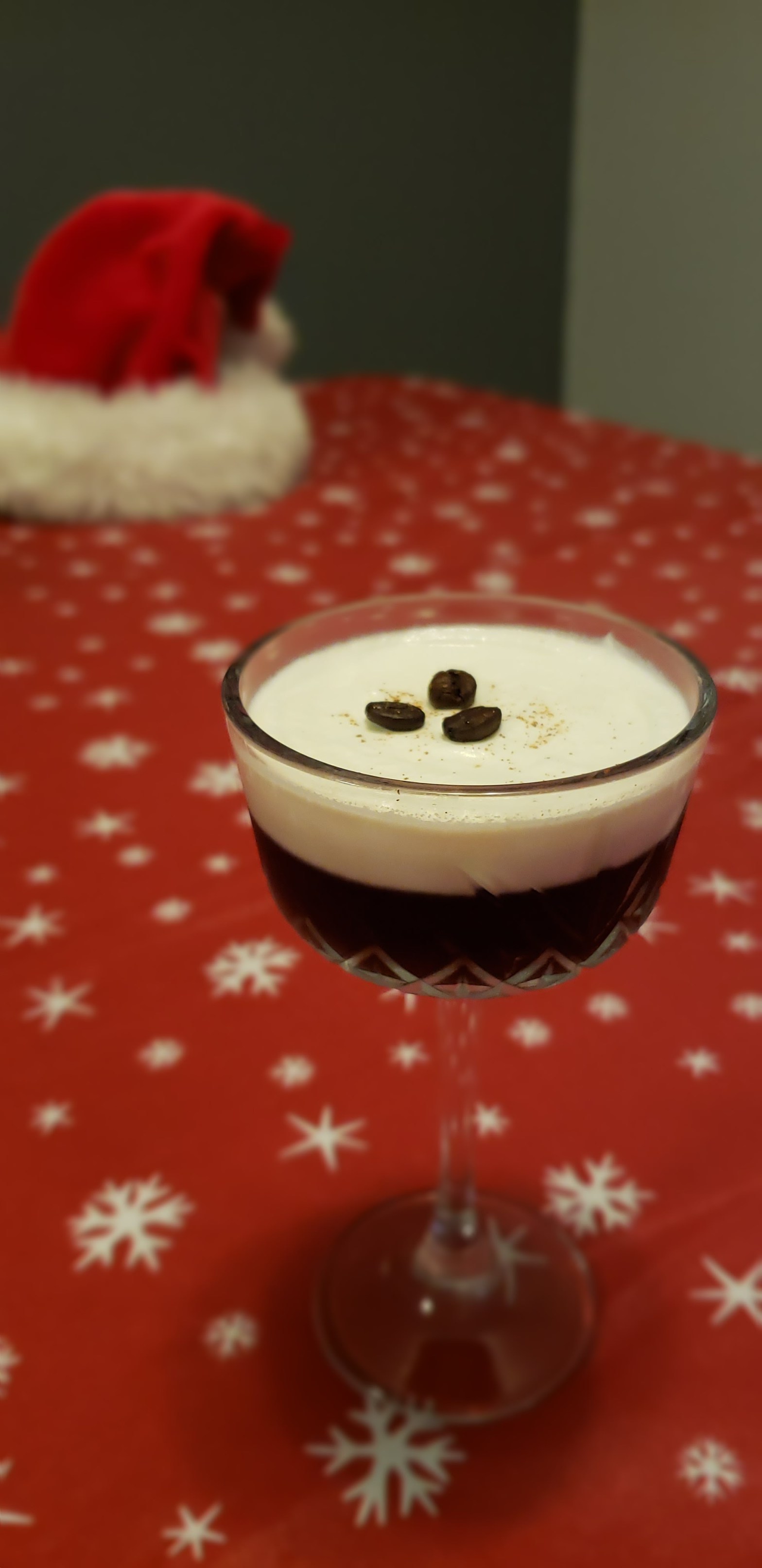
The Coffee Flip is a good example of a flip with Amaro, although feel free to make up your own.

Combine and dry shake the following ingredients:

½ oz Averna

½ oz vanilla simple syrup

1½ oz Appleton Estate rum

1 whole raw egg

Once everything’s nice and mixed and fluffy, add:

1½ oz chilled coffee & ice, 

and shake again to chill. Strain into a wine glass, and garnish w/ fresh nutmeg. 

For other versions of amaro cocktails, try:

Aperol Spritz

Campari Aranciata

Suze White Negroni

Brooklyn

Cynar Flip

Yard Bird

Winter is Coming 

Cheers party peeps, and here’s to a rockin 2021. May we all survive the next year with the ninja life hack survival skills we’ve learned in 2020.

20. Flips: The Balance – Eggs & Dairy

Online School of Cocktailory  🍸

For drinking #alonetogether 

Section 106: The Flip

I know it seems creepy to drink raw eggs unless you’re trying to be Rocky Balboa, but if it calms your nerves, here’s some stats: salmonella enterica outbreaks are pretty rare, the contaminated brands are recalled & posted by the CDC & FDA, the only US egg issue I saw in 2020 was in Jan. there was a listeria recall on hard boiled packaged eggs, and you’re just as likely to get salmonella food poisoning from cooked eggs with runny yolks, or eating eggs in mayo or cookie dough. It is recommended to buy fresh eggs if you’re going to be eating any parts uncooked, and make sure the shells are clean, not cracked anywhere, and keep eggs refrigerated until use. Ok, I feel better. Let’s get crackin’ lol

Some cocktails like the New York Flip call for just a yolk, which makes for a nice thick fatty emulsifier and a heavy satisfying drink.

Some call for just the white, like the Gin Fizz or Pisco Sour. The foamy egg white is silky and fluffy when shaken, and it calms bitter flavors. Egg whites do have a bit of a funky smell after they’re exposed to the air for a bit, so that’s why fizzes and sours made with egg whites get cute little dots of bitters or Pernod, or a pinch of cinnamon or nutmeg on the top to smell nice. Like fancy cocktail deodorant.  

If you want to go super cocktail nerd status, you can enclose your raw eggs in the fridge in an airtight container overnight with aromatic spices, and the egg white will absorb the aroma for your next drink. 

Classic flips use the whole egg to take advantage of both the creamy yolk and the frothy white. Hello, my dear friend eggnog 😍

The cocktail term ‘nog’ actually refers to alcohol with cream added. Although the origin of the term is highly debated online. The trouble with ever getting accurate alcohol history is that the people passing it along for hundreds of years were all typically intoxicated. Regardless of its history, higher fat milks work best in nogs since the added fat makes the drink less likely to curdle when mixed with acid. Fat also holds flavors on your tongue longer, a trademark of a good winter Flip. Drinks with a lot of dairy like a White Russian may use half & half or whole milk instead of cream, which keeps the dairy from overshadowing the rest of the ingredients. 

Dairy alternatives: many people can’t or don’t consume dairy, and higher fat nut milks like almond milk make a decent substitution. Some stores even carry almond milk creamer now, which I’ve tried and it seems fine. I don’t know that I’d use an egg substitute in a cocktail,  but if you try it, tell me how it goes. 

For our experiments this week, I’ll give you some drink options. We did a classic flip last week with a whole egg, so here I’ve got a Silver Fizz with just egg white, a New York Flip with just cream & egg yolk, a White Russian with just cream, and of course delicious Eggnog with all the things. 

-Silver Fizz- 

Dry shake the following ingredients until the eggwhite is frothy,  then shake again with ice to chill:

2 oz. gin

3/4 oz. simple syrup

3/4 oz. fresh lemon juice

1 egg white

– Double strain into a highball glass. Then slowly add:

2 oz. cold seltzer 

– Gently tap the glass on the counter to settle the foam, and a nice white fluff should form on the top. 

-New York Flip-

Dry shake the following ingredients, then shake again with ice:

1 oz. bourbon

3/4 oz. tawny port

1/4 oz. simple syrup

3/4 oz. heavy cream

1 egg yolk

– Double strain into a chilled coupe and garnish with fresh grated nutmeg. 

-White Russian-

Stir on ice: 

1 1/2 oz. vodka

1 oz. coffee liqueur

– Strain into a double old fashioned glass or Irish coffee cup (and add fresh ice if desired). 

– Next, dry shake and then gently spoon on top:

1 oz. half & half

– Garnish with 3 coffee beans resting together on the cream. 

-Classic Eggnog- 

Dry shake the following ingredients, then shake again with ice after the egg has been fully frothed: 

3/4 oz. barrel aged French style rum

3/4 oz. of a VSOP Cognac (for us Very Special Old People, lol) 

1 teaspoon Giffard Vanille de Madagascar 

3/4 cane sugar syrup 

1 oz. heavy cream

1 whole fresh egg

– Double strain into a chilled Old Fashioned glass, and garnish with a few zests of cinnamon & nutmeg. 

Happy Holiday Drinking Everyone!

19. Flips: The Core – Fortified Wine

Online School of Cocktailory  🍸

For drinking #alonetogether 

Section 106: The Flip

In the martini chapter we learned about vermouths: wines that are fortified with extra booze and flavored with botanicals. Here we’ll learn about unflavored fortified wines, like sherry, port and madeira. 

Sherry can range from super dry and almost salty, to super juicy sweet and raisiny based on how it’s aged. I can’t say I’ve ever enjoyed Sherry even in food, but maybe learning more about it will help. 

All sherry is aged in oak barrels, but instead of being filled to the top like other wines to limit oxygen, sherry casks are filled to 80% which allows a layer of yeast called flor to grow, creating a protective barrier on top of the young wines to prevent oxidation. This is called biological aging, and it makes for dry sherries like fino and manzanilla. To make an amontillado or palo cortado sherry, you would then age the cask again without the flor. 

Oloroso and Pedro XimĂŠnez are richer flavored sherries that are intentionally barreled with oxygen, giving them a nutty flavor. As the sherry oxidizes, the alcohol vapors evaporate, making them more concentrated. 

The casking process to make sherries and ports also differs from other wines because they go through Solera (or fractional) aging, which is super creepy! Most aged wines, beers, or spirits are distilled, then barrel aged, and maybe blended or aged again before they’re bottled and distributed with a record of each step and vintage. But not with our Fibonacci booze here! So for sherry, traditionally the newest barrels would be placed on a top shelf at the winery, and each shelf below would house older and older blends. Then, several times a year some of the wine from the oldest barrel (or Solera as it’s named) is bottled and that partial volume is replaced with some wine from the next oldest casks above it. Those casks are then topped up with the ones above it, and so on, and so on, until we get to the youngest barrel (or sobretabla) and when that guy is emptied you make a new batch. No barrels except the newb are ever fully empty, and because of this the sherry from the Solera has trace amounts of extremely old wine, sometimes dating back centuries depending on the winery. Besides being super complicated, it does make for an extremely consistent wine each year. That being said, once they’re bottled and shipped to your store, they tend to break down with age, so don’t keep these for more than 2 years. 

Styles: Fino is the dry youngin made from palomino grapes. Manzanilla is a fino from one town in Southern Spain, and those sherries are a little extra briny. Usually 1 teaspoon to 1/2 oz of these is used in drinks to make them kinda salty/creamy,  lol >insert Mike joke here<  Finos and manzanillas are also sometimes served ‘en rama’ or raw to the locals, but the raw wine doesn’t export well. So the next time you’re popping by SanlĂşcar de Barrameda, be sure to hit up some tasting rooms for me. 

Amontillado has dry, salty, yeasty flavors like fino from the biological aging with flor, and some concentrated nutty, dried fruit flavors since it also goes through oxidative aging. Lustau Los Arcos Amontillado tends to be a bartender favorite. Palo Cortado is similar, but spends less time in the flor cask, and has a raisin, coffee, molasses smell. 

Olorosos just go through oxidative aging, and can be treated like a sweet vermouth in cocktail recipes, just without the extra spices and sweetener. 

Sweet Sherries are concentrated dessert wines where the grapes sun-dry to almost raisin status before it’s fortified and then barrel aged. Pedro XimĂŠnez grapes make the sweetest sherry, like a simple syrup. Moscatel is made from Muscat of Alexandria grapes which have a strong floral perfume smell (so use small amounts when mixing, like a teaspoon max.) 

Cream Sherries, which get a bad rap since so many cheap cooking wines have this label, just means that different types of sherry were mixed together. Many of these make a good sub for sweet vermouths like Aperol or Campari. 

Port is made from a blend of Portuguese grapes, and unlike sherry, are crushed, fermented, and then later fortified with a young grape brandy. Ruby port is aged in wood casks for 2 yrs min. Vintage port is aged in casks for 2 yrs min. as well, but then aged again in bottles for many more years, and doesn’t have the same breakdown issue that sherry does. Late-bottled vintage port stays in the casks 6-8 yrs, but doesn’t have to be bottle-aged. Colheita port is cask-aged even longer. And finally tawny port is a blend of different cask-aged ports, and also is not bottle-aged. 

Madeira is grouped by age, Rainwater being the youngest at 3 yrs. min. in oak barrels is the cocktail mixer of choice. It makes drinks seem lighter and just a tiny bit sweet and fruity. 

All of these wines can be treated like a sweet vermouth when mixing, but each obviously comes with it’s own flavor. Again, because these are wine, they need to stay refrigerated after opening, and still only last about a month max. in there. 

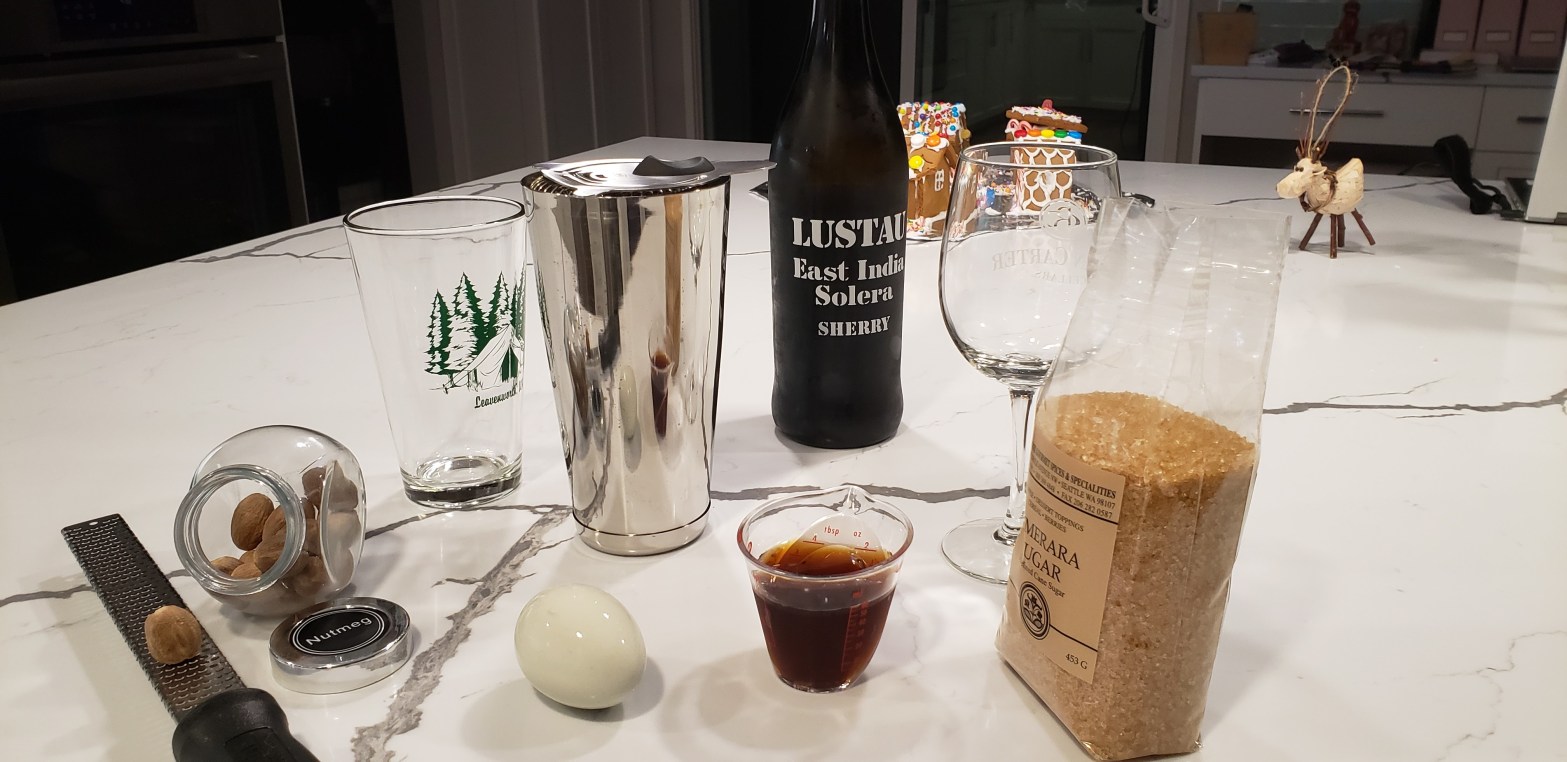
Feel free to experiment with some different sherries this week. You could either do a few in little tasting glasses, or make a classic flip: 

-The Flip- 

Dry shake together (which means no ice) 

the following ingredients: 

2 oz. of a fortified wine

2 teaspoons of demerara sugar  (which is kind of a course ground brown sugar) 

and 1 whole fresh egg 

(I know gasp right? Flips are a celebration of decadence and wholehearted disregard for nutrition. Tis the season party people!) 

Once your ingredients are mixed really well, shake again with ice and double strain into a chilled coupe. (Double strain means use your regular strainer and a fine mesh sieve to remove any ice chunks that can break the egg’s emulsion to the liquor, or make egg whites go flat). Grate a little nutmeg on top and cheers!