18. Highballs: The Balance – Sparkling Water, how to serve it, and what are my other options cuz that sounds boring.

Online School of Cocktailory  🍸

For drinking #alonetogether 

Section 105: The Highball

Well, when we did the bitters & seltzer experiment we saw how sparkling water can dilute or spread out flavors that were pretty concentrated before, and how the bubbles bring more of the bitters’ smell up to your nose. 

Technically there are different kinds of unflavored sparkling water to choose from. Sparkling mineral water is naturally occurring, but the amount of carbonation, types of minerals, and acidity can vary quite a bit, so they’re rarely called for in cocktail recipes, but fun to play around with. Soda water or club soda is a product made to mimic mineral water by adding small regulated quantities of minerals and then carbonated, giving it a nearly unrecognizable salty flavor. These are good at boosting citrus and calming bitter flavors. Plain seltzer is just filtered, carbonated water with no additives, so whenever you use this as your mixer, you know you’re not altering the other flavors at all. 

Building & serving a highball cocktail: 

The ideal highball glass holds 12 oz. for your 2 oz. spirit plus mixer and cubes. It should be tall and narrow to minimize soda bubble poppage like a champagne flute is, weighted on the bottom to minimize knocking-overage, and just wide enough to fit your stack of cubes plus a bar spoon for gentle stirrage. 

Both the seltzer and the glass should be cold, not just because a bracingly cold cocktail is delicious, but because the soda bubbles will stay in solution longer at lower temps and then you don’t end up with a flat drink. This is the same reason we don’t use ice chips in a highball, since the extra surface area makes the co2 come out of solution faster. If we go with one large cube instead, the drink will stay bubbly, but the ice doesn’t evenly contact the whole beverage. So we go with the standard 1″ cubes for medium bubble-popage and ideal soda chillage. 

Highballs don’t have to be carbonated at all, take Screwdrivers or the Bloody Mary. In fact just about anything from the previous chapters can be used to make a highball variation, the difference is really just in the extra volume of the non-alcoholic mixer. 

Since the holidays are a-comin’ fast now, we’ll skip the homework and nosedive straight for the bonus cocktail recipes this week. 

-Classic Americano- 

Pour 1 oz. Campari & 

1 oz. Carpano Antica Formula vermouth

into your highball glass. Add 3 ice cubes and stir for 3 seconds. 

Add 4 oz. cold seltzer and stir once.

Garnish with an orange half-wheel and serve with the remaining can of seltzer, cuz it’s fun to keep topping off this drink. 

-Tequila Sunrise- 🌅 

Combine 2 oz. blanco tequila, 

4 oz. fresh orange juice, & 

1/4 oz. fresh lime juice in a highball glass with 3 cubes. Stir for 3 seconds. 

Add 1/4 oz. grenadine (or 1 teaspoon POM wonderful mixed with 1 teaspoon of simple syrup)

Don’t stir in the grenadine so it settles to the bottom of the glass.

Garnish with an orange half wheel and a lime wedge. 

-Pimm’s of London-  (another Jet favorite) 

Pour 1 oz. London Dry Gin, 1 oz. Pimm’s No. 1, & 2 oz. lemonade into a highball glass with 3 cubes.  Stir for 3 seconds. Add 2 oz. ginger ale, strawberry slices, cucumber slices, and a half orange wheel, and gently stir to combine. Top with more ice, and garnish with a fresh mint sprig and a straw.  😛 🍊 🍃 

(can also be made with just lemonade or just ginger ale as the mixer) 

-Bellini-

Pour 1 oz. fresh peach puree in a champagne flute. 

Top with 5 oz. cold prosecco, and gently mix with a bar spoon. 

(You can make unlimited variations of these by subbing out the peach puree with other fresh peeled and blended fruits) 

-Kir Royale-

Pour 1/2 oz. Chambord in a chilled champagne flute, then pour in

5 1/2 oz. chilled dry sparkling wine, and gently mix with a bar spoon.

(You can make unlimited variations of these too by subbing out the black currant liqueur with other liqueurs or brandies) 

-Wine Spritz-

(a great choice for using up yesterday’s open wine at any occasion) 

Pour 4 oz. of any wine of choice into a large wine glass. Half fill the glass with 1″ ice cubes. 

Add 2 oz. any plain or flavored soda water, and gently stir once. 

Garnish with pretty much any fruit ever. 

1 lemon wheel is traditional, but you can go whole fruit salad Sangria style with this drink. You can also spruce it up with a 1/4 oz. of lime juice and 1/4 oz. simple syrup, and give a nod to the sours from weeks gone by. 

Cheers my friends, hopefully this is enough to keep you in high spirits for the week  😊

17. Highballs: The Core – any spirit that also provides its own seasoning 

Online School of Cocktailory  🍸

For drinking #alonetogether 

Section 105: The Highball

At its most basic level, any two-ingredient rail drink qualifies as a highball, but the ingredients, the preparation, and the presentation are what make these cocktails shine. For the purpose of our liquor studies in each section, we’ll discuss Scotch, Irish, and Japanese whisky in a Whisky Highball this week. 

Single-malt scotch must only contain barley and water, must be distilled at least twice in copper pot stills, and then aged in oak casks for a minimum of 3 years, produced by only one distillery.  Each batch can be blended with other different aged batches, but the year stamp on the bottle, like 12-year, states the youngest whisky that’s in the mix. Most of Scotland’s whisky is is made in the Highlands like Glenlivet and Macallan. Lowlands whisky is usually light-bodied, a little sweeter, and has some peat smoke smell. Scottish Isles whisky is considered full-bodied, aggressive,  and intensely smokey, so very little is needed in mixed drinks to get the flavor across. Actually since most single-malts are pretty expensive, using just a little in a cocktail to accompany another cheaper whiskey is a cost effective method to play with balance and seasoning without accidentally ordering yourself a $50 cocktail. 

Blended scotch is a little cheaper, and gets more flexibility in that the producers can source single-malts from different distilleries, and the barrel aging is more like 6 months. 

There are Irish whiskies that follow the same requirements as a single-malt, but more often you’ll see the art of blending lots of whiskies with different grain comps & barrel types, in larger pot stills, and going through a triple distillation process. They’re usually light in flavor like a young-aged bourbon and good blended into citrusy cocktails. A pure pot still Irish whiskey however, like the Redbreast 12-year has a heavier coconut oil quality that can stand alone in an old-fashioned style drink. 

Japanese Whisky has very few regulations on stills, casks, or processes, so distilleries produce a pretty wide range of styles. That being said they’re also a limited export and there are only a few brands that make it here that aren’t crazy expensive. 

Homework time! Since we’ve already spent a chapter studying whiskies, this time we’re going to study how the seltzer in a highball affects different spirits. The base recipe to any highball is 2 oz. spirit + 4 oz. seltzer water on ice. This recipe is then pushed one way or the other depending on how flavorful the spirits or mixers are to achieve a good balance. 

To start, pick a few liquors you’d like to try, and a couple bottles of plain seltzer. These tests you can do on different nights, so repeat with any liquor or fortified wine combo another day as you wish. Whiskey, gin, brandy, dark or spiced rum, or any other big-flavored alcohol will work well. I’ll start with a gin. 

Pour 2 oz. gin into a highball glass, add 3 ice cubes, and stir for 5 seconds. Take a sip, and see what you can taste. What can you smell? Now add 4 oz. cold seltzer, stir once, and take a sip. How is it different now? Do you smell the gin more or less? Are there different flavors you notice now that the alcohol is spread out? Do you think you would have noticed them if it was plain water instead? 

Try it again with another spirit and see what happens. Do different flavors come out? The only alcohol I wouldn’t recommend in this trial is tequila, as the seltzer will become almost painfully spicey when it hits your nose. 

Alright thanks for joining me on another week in isolation of Captain Nemo’s deep sea dive into the world of cocktails. Cheers my fellow explorers  🥃🥃

“Of all the world’s spirits, none brings out the nerds like scotch does, and for good reason…” pg. 203 of the Cocktail Codex

16. Daisies: Bonus Round!

Online School of Cocktailory  🍸

For drinking #alonetogether 

Section 104: Daisies

The lesson I’ve learned from this chapter is that the more complicated the recipes get, the more someone had to consider all the alcohol styles, ages & brands vs. fruits & sweeteners combos to reach a deliciously balanced cocktail. So this is the part where I step back and follow their recipes. But I Have learned from the previous weeks how to spot an obviously bad internet recipe. Particularly when there’s more than 1 oz. of juice or syrup, or more than 2-3 oz. combined of any kinds of liquor, then something’s up and we’re getting into frat punch territory. 

And now for the good part, here are some extended family 👪 relatives of Daisies, Sidecars and the Margaritas of the world: 

– Cosmopolitan- of course

2 oz. citrus vodka

3/4 oz. Cointreau

1/2 oz. fresh lime juice

1/2 oz. unsweetened cranberry juice

1/2 oz. simple syrup

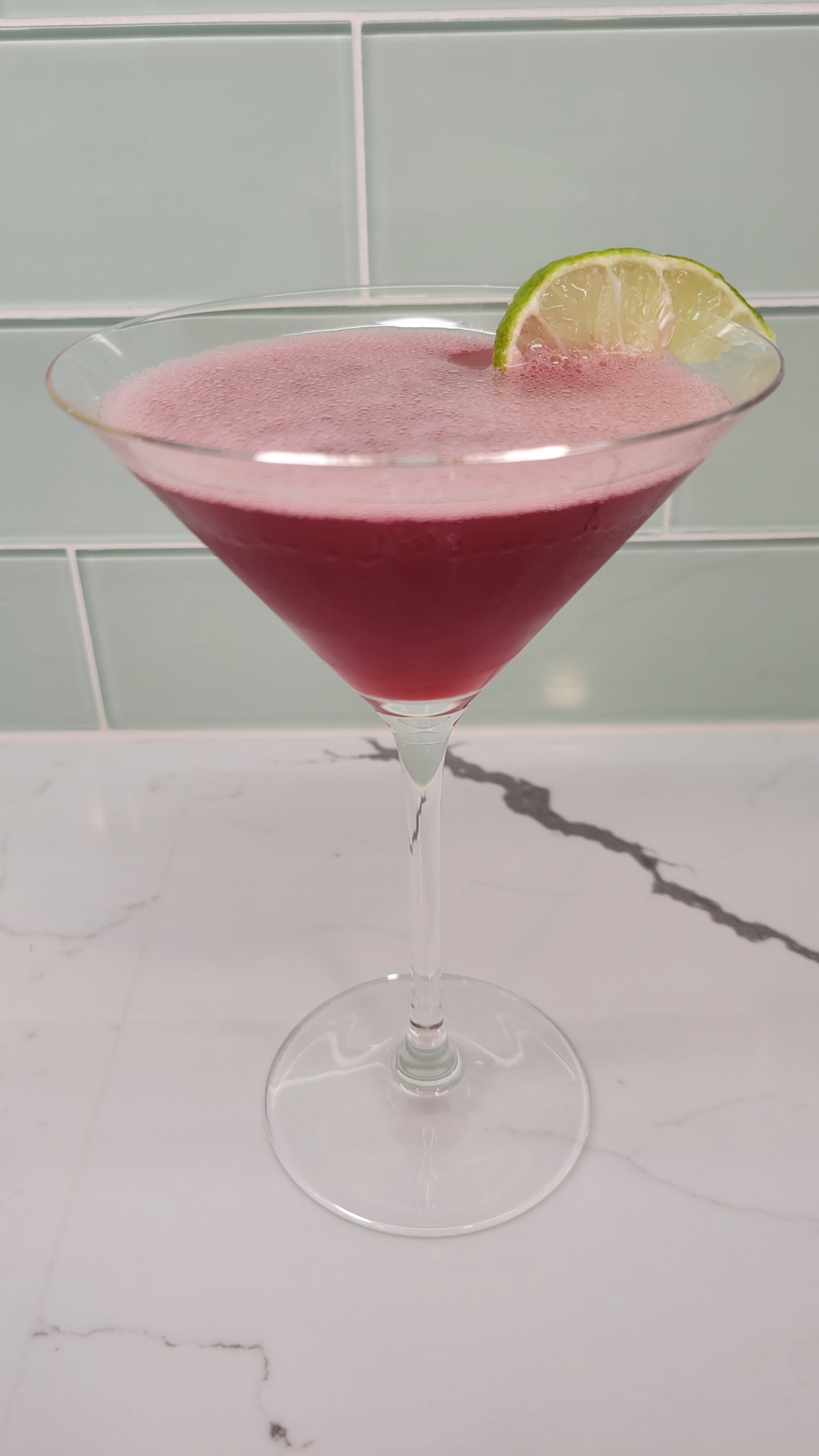
Shake with ice and strain into a chilled coupe. Garnish with a lime wheel 

-Champs-Élysées-

2 oz. congnac

1/2 oz. green chartreuse 

3/4 oz. fresh lime juice

1/2 oz. simple syrup

1 dash Angostura bitters

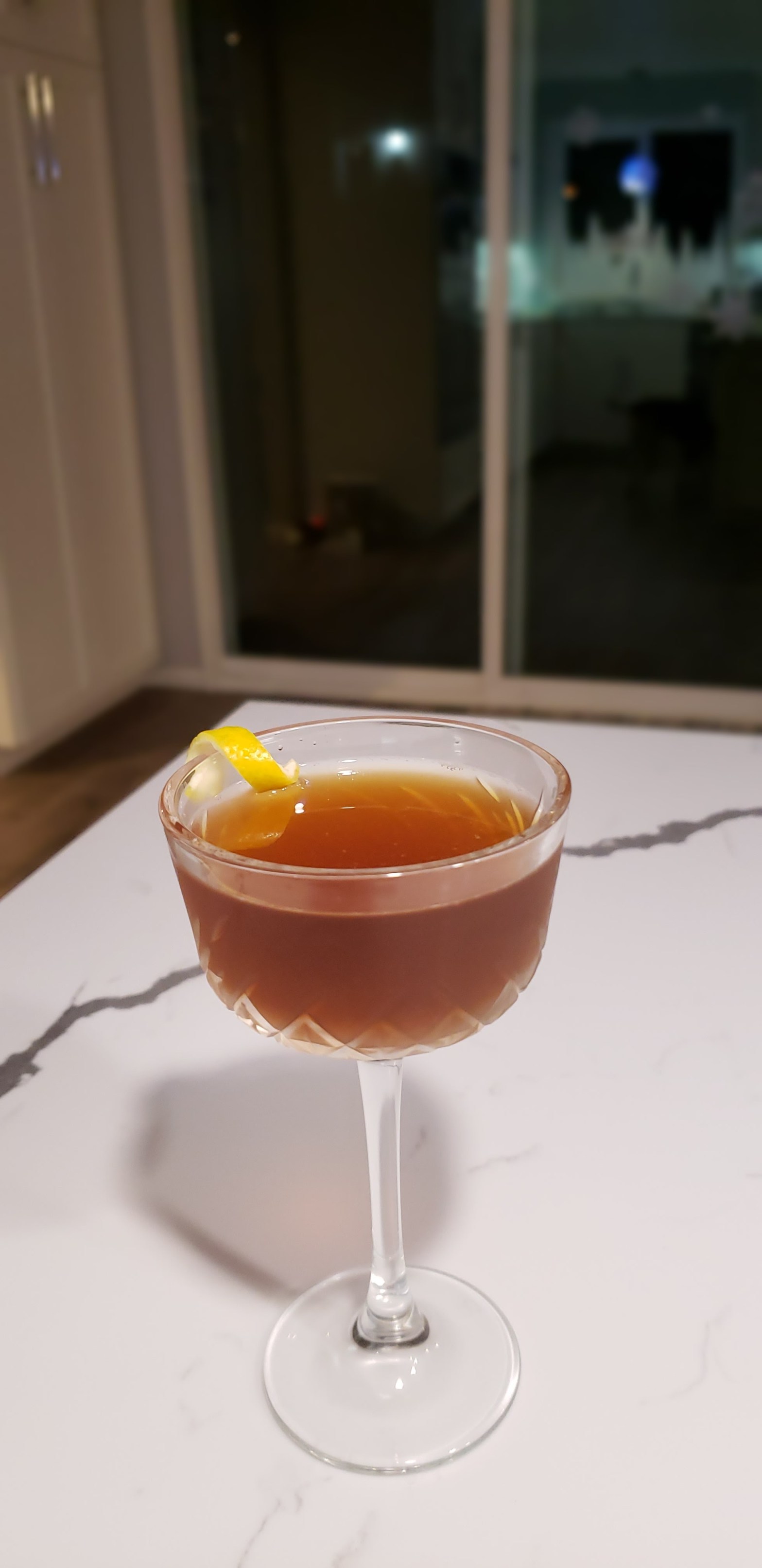
Shake all ingredients with ice and strain into a chilled coupe. Express a lemon twist over the drink, and set on the edge of the glass. 

-Corpse Reviver # 2- another Jet favorite ⭐

3/4 oz. London dry gin

3/4 oz. Lillet blanc

3/4 oz. Cointreau 

3/4 oz. fresh lime juice

2 dashes absinthe (either spritzed into the glass first, or shaken with the rest of the party if you don’t have a tiny spray bottle for your absinthe, lol)

Shake all ingredients with ice and strain into a chilled coupe.

See you next week!

15. Daisies: The Balance & Seasoning together (say wahhaat?)

Online School of Cocktailory  🍸

For drinking #alonetogether 

Section 104: Daisies

It’s more liquor. So much liquor. Stay with me for a sec. 

If Section 101, the Old Fashioned pattern was core liquor + sugar + garnish, and Section 102, the Martini pattern was less core liquor + milder alcohol like wine or vermouth + garnish, then we follow the same progression here.

Section 103, the Daiquiri (and sours) was core liquor + sugar & juice to balance + garnish, so Section 104, the Daisy (Sidecar/Margarita style) is less core liquor + less sugar & juice + milder alcohol like fruity liqueurs + garnish

Hence a Sidecar, a Margarita, and a Cosmopolitan being in the same chapter. Still with me? Ok cool. 

As far as cocktail ingredients go, liqueurs are alcohol, flavoring, and sweetener rolled into one, but it’s hard to know what they’ll taste like or how much you’ll need in a cocktail until you try it. Luckily the ABV has to be listed on the bottle, and most are at least 20% to be shelf stable. Low ABV is usually sweeter, and then there’s green Chartreuse at a whopping 55%. 

Just like we learned in the bitters experiment, some bottles have an artificial chemical flavor which don’t make for yummy cocktails, so it’s best not to bargain bin shop for liqueurs and just pick a couple good ones at a time. 

Liqueurs can be made from either a neutral base spirit (like Cointreau is) or from brandy (like Grand Marnier) and infused or macerated with fruits, peels, herbs and other spices. Orange liqueurs being the most common, followed by St. Germain, an elderflower liqueur also referred to as bartender’s ketchup because it goes good with everything. Herbal liqueurs are blends of all kinds of stuff and were originally touted as medicinal elixirs to cure all ills; Chartreuse being made by Carthusian monks near the French Alps, and Bénédictine created by Don Bernardo Vincelli, a Bénédictine French monk in the 1500’s. They pretty much come in every flavor imaginable, so it’s up to you or your cocktail book to decide what sounds good together. 

Ok, experiment time!

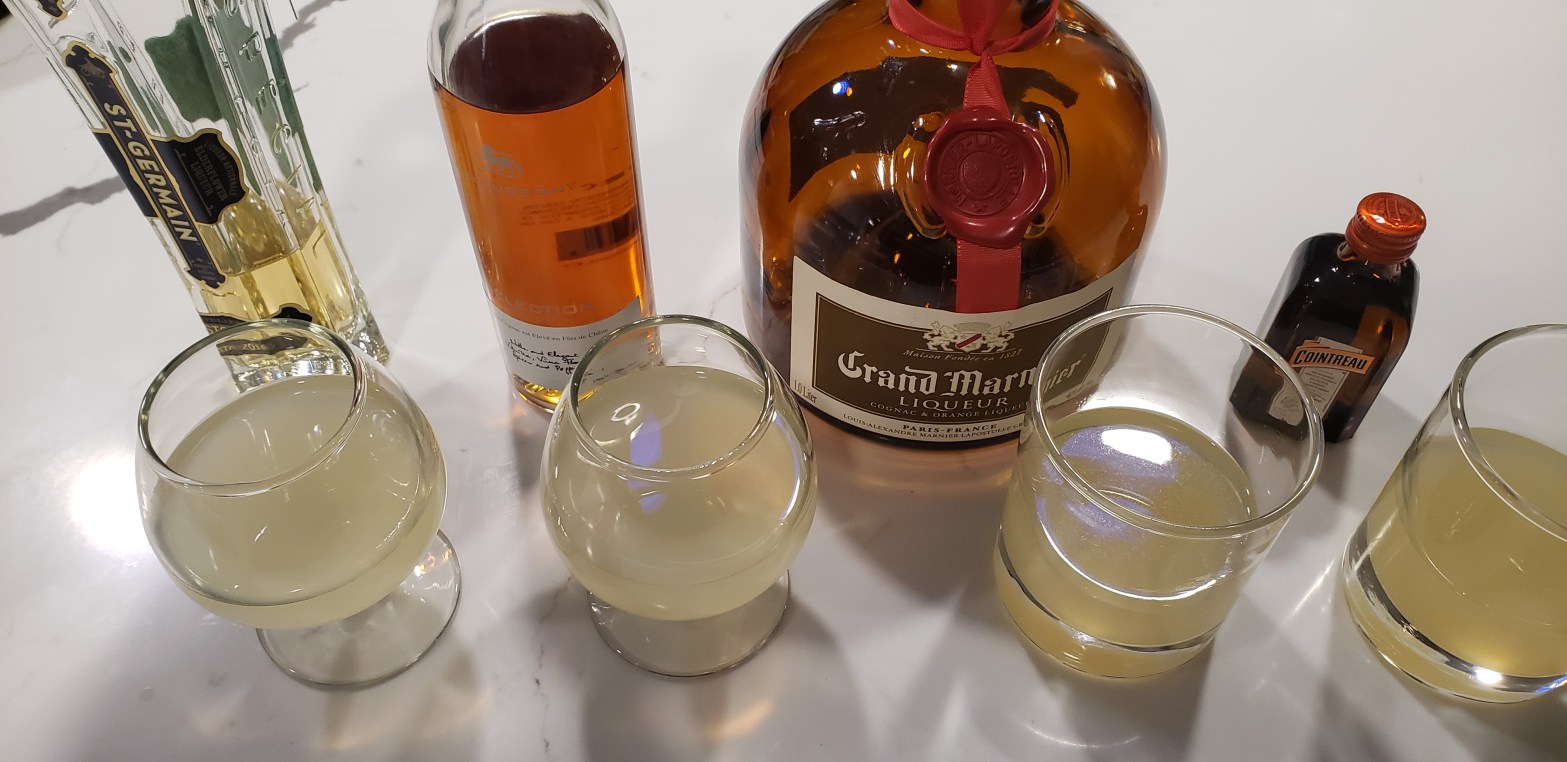
Because there are so many liqueurs and their proportions in each recipe are so varied based on how sweet or strong they are, I propose the Champagne test as our blank slate to practice on, but you’re welcome to try this with vodka or soda water (like we did with the bitters) or any other fairly neutral base. We’re going to make 3 cocktails again, so you’ll need 3 liqueurs to compare. 

The Recipe (swap at will)- 

2 oz. champagne

1/2 oz. fresh lemon, lime, or other juice

1/4 oz. simple syrup 

3/4 oz. of whatever your liqueur de jour is

– Shake the juice, syrup and liqueur with ice and strain into a chilled coupe or flute. Top with the 2 oz. of chilled champagne. 

-Some liqueurs at 3/4 oz. will overpower the other ingredients, while others will be barely recognizable, but testing the flavor and brand you have to start with like this will let you know how to mix it in the future, and tell you if it requires simple syrup, or if the liqueur is sweet enough on its own. 

Let me know what you made in the comments and we can test more flavors with more kitchen scientists. Cheers!

14. Daisies: The other Core – Mezcal

(say what now? What happened to brandy?)

Well my friends, looks like we’ll be here a while. Pour yourself a drink, it’s time for the latest installment of:

Online School of Cocktailory 🍸

For drinking #alonetogether

Section 104: Daisies

Brandy is a catch-all term for spirits distilled from fruits like grapes or apples. Mezcal is a catch-all term for spirits like tequila distilled from agave. These 2 spirits share a section based on their similar usage in cocktail prep, not that the 2 taste the same or would taste good together.

El tequila viene 100% de agave (sabe bien) o mixto (es no bueno, no lo compres)

Tequila is made from Weber blue agave hearts, or piñas, from Jalisco mostly that are steamed in an oven and then distilled. Unaged blanco tequila is awesome with citrus cocktails like the ever famous Margarita. Resposado is barrel aged for 2 to 12 months and has just a kiss of barrel characters like vanilla & clove. Añejos spend 1 to 3 years sleeping in their barrels and have the spicier oak flavors that go with it. Delicioso as a Manhattan alt. Extra añejo is any time spent over 3 years in the barrel, but these are pretty pricey to be mixing in a cocktail.

Spirits labeled Mezcal as a style rather than describing the whole agave-based category, are usually from the state of Oaxaca, are unaged, and get their smoky flavor from its peasant heritage style of small-batch artisanal production. The piña is cooked in pits in the ground lined with volcanic rock and heated with mesquite charcoal, like making vegan barbacoa. Then it ferments and gets distilled but hangs on to it’s bbq smokey smell. Back in the 50’s when larvae from agave-eating caterpillars accidentally got bottled in some Mezcal, the producer thought it added a good flavor, but it’s essentially a marketing gimmick now. You can eat the bug, but umm gross, don’t. It does not make you hallucinate. There is no mescaline. That’s another marketing gimmick. The high from Mezcal is just that it’s bottled at a higher proof than other liquors. This lowers the evaporation temperature of the alcohol apparently so when you take a sip, a little poof of alcohol bursts into gas, making the drink more aromatic. Fun!

Bacanora from the Mexican state of Sonora is made the same way as Mezcal from Oaxaca. However Mezcal can be made from many agave plants, and Bacanora is made just from wild plants of agave Pacifica. It has the earthy barbacoa flavor without being as smoky.

Raicilla used to be known as Mexican moonshine, but Tequila producers in Jalisco state make it now too. Instead of blue agave, Raicilla is made from two different agave plants: lechuguilla and puta de mula. It is cooked like tequila, has a bit of smoke, and is sweeter and fruitier than most other mezcals.

Sotol is a related spirit, but isn’t made from agave at all. It’s made from a succulent called desert spoon mainly in the Mexican states of Chihuahua, Durango and Coahuila. It’s cooked the same way as Mezcal, and has a similar earthy flavor but less smokey.

(Mezcal facts credited to Thomas Henry Strenk’s 2017 article “What’s the Difference” and from the Pensador Mezcal website, since my book was a little light on facts this week)

Experiment time!! It’s the moment you’ve all been waiting for: Margarita night 🍹

It’s not so much an experiment as it is, having a margarita. If you feel like buying a bunch of different mezcals to compare them, by all means go for it, but I’m not a big fan so I’m just going headfirst into this cocktail:

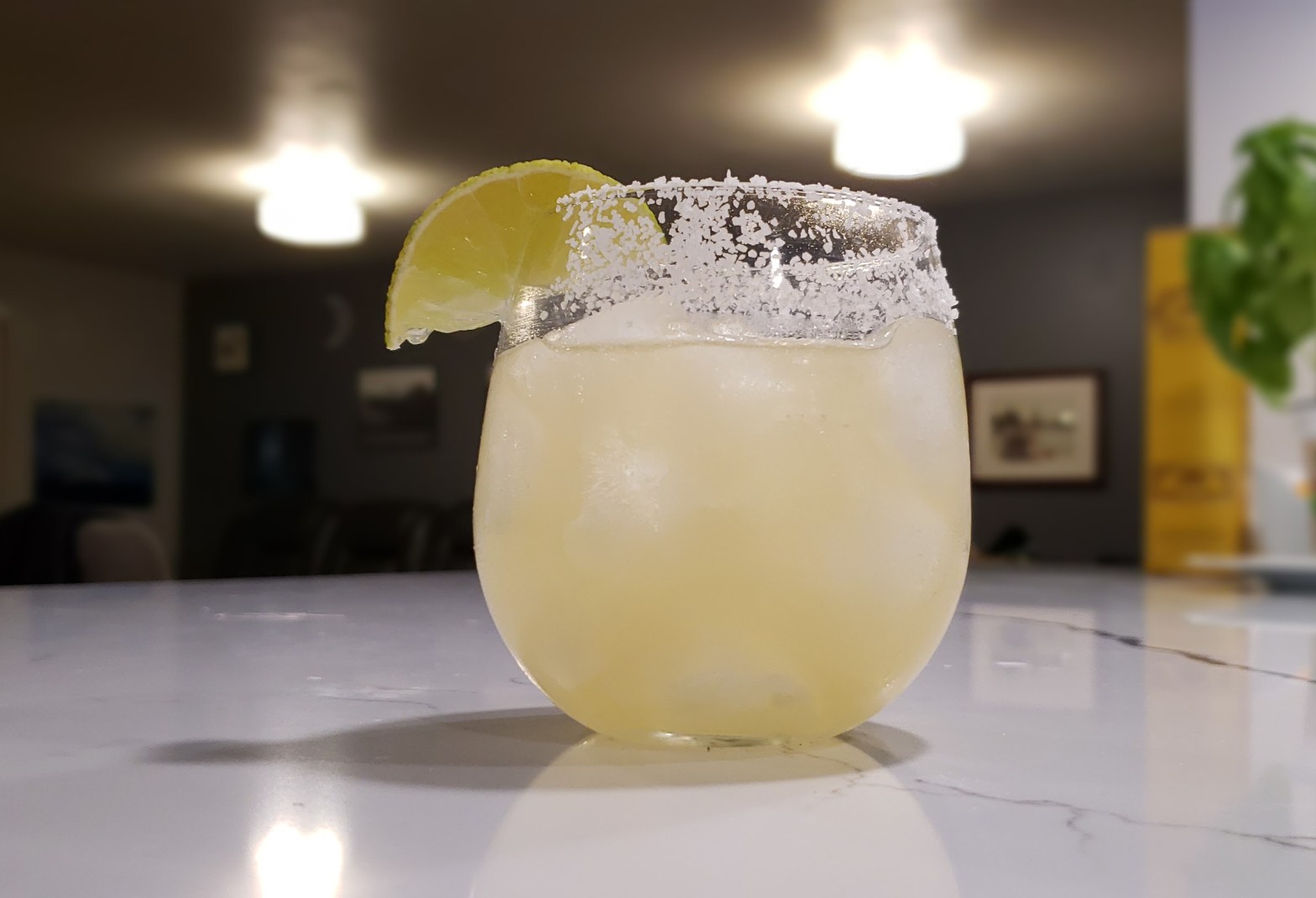
Start by rubbing a lime wedge along half the rim of an old fashioned glass about a 1/2″ down and not on the inside of the glass. Then evenly roll the wet part in pink or kosher salt. Put 1 large ice cube in the glass. Shake the following ingredients with ice and strain into your prepared glass:

2 oz. 100% agave blanco tequila

3/4 oz. Cointreau

3/4 oz. fresh lime juice

1/4 oz. simple syrup (more or less per your preference for sweetness)

Garnish with your lime wedge on the non-salted part of the rim and send me a pic 📷

Cheers!

13. Daisies: The Core – Brandy

Online School of Cocktailory 🍸

For drinking #alonetogether

Section 104: Daisies

Brandy is a catch-all term for spirits distilled from fruits like grapes or apples. Brandy styles are divided into the following:

French Cognac & Armagnac is a grape-based wine that is distilled and then aged in oak barrels. Mmmm barrel. They can be sweet, fruity, woody and/or taste like christmas spices, vanilla or cooked fruit. They are rated by how long they were aged, VS (who’s very special) was aged 2 yrs, VSOP (who’s a very superior old pale) was aged 4 yrs, and XO (who’s extra old) is everything over 6 yrs. Hennessy VS being the most common cognac. Armagnac is spicier, like rye compared to bourbon. Armagnac blends are labeled VS, VSOP & XO like cognac, but the majority isn’t blended and instead is dated by vintage like wine.

Spanish Brandy is richer, darker and sweeter because it is barrel-aged much longer than French Brandy. Since these flavors will give your cocktail a hefty kick of spiced fruitcake or raisins, it’s usually used in small doses like a liqueur.

Pisco from Peru or Chili is made from more floral smelling 💐 varieties of grapes and is bottled un-aged, so it’s still bright and young compared to our senior citizen Spaniard brandy. The most common use is a Pisco Sour, but it also makes good martinis or can be used in place of a blanco tequila.

Singani is like a pisco but from Bolivia 🇧🇴 and more floral smelling. If the travel bans ever lift, you could go and order a Chuflay, which is Singani & ginger ale with a slice of lime. As it stands, it’s often hard to find signani stateside.
French Calvados is made from apple & pear juice, fermented into cider, and then distilled and aged in oak barrels for 2+ years. It has a spiced baked apple pie or caramel aroma.

A’murican Apple Brandy is made from hard apple cider and has been around since the early colonists. Where Calvados tastes more like a cognac, this tastes more like whiskey. Laird’s was the only producer for a long time, and they also make applejack which is apple brandy & grain spirits aged together for 4+ years in bourbon barrels.

French eau-de-vie (or the plural eaux-de-vie) aka “water of life” aka fruit brandy, is a clear, unaged brandy from anything not primarily grape or apple based. Like pears, cherries, or apricots.

Pear brandy doesn’t so much taste like pear as is does amplify the other flavors in your cocktail, making apple more appley, or mint or licorice more cold feeling and spicy. Hence why lots of apple juices in the store also contain pear juice.

Cherry brandy or kirschwasser’s base flavor is burning, but after a few sips I’m told you can taste cherry. It’s best to only use about a teaspoon per cocktail for obvious reasons.

Apricot brandy is also German and held at a teaspoon per cocktail, and it makes drinks seem fruit-juicy without adding sweetness, which is quite a feat.

Alright I know that was a lot, and if you’re like me you own zero bottles of brandy, but it is nice to have a little around for the holidays, and there are just so many styles to try. So here’s my holidays-in-quarantine not-quite-white-elephant game proposal: find a few friends who are each willing to buy a different style of brandy and some little empty bottles for splitting it up. Divide your designated bottle amongst your little gifter-sized bottles, label them, and deliver/swap with your fellow participants via porch pickup. You can pretend you’re collecting Pokémon balls or easter eggs as you go.

Everybody knows booze kills germs* so you can all cheers when you get home via zoom, duo, or hangouts or whatever to how healthy you’ll all be this holiday season. Prost!

12. The Daiquiri: Bonus Round!

Online School of Cocktailory 🍸

For drinking #alonetogether

Section 103: The Daiquiri (and other sours)

Now that you’re practically an expert on the sour template, you can swap any other spirit for the rum, swap juices, and raise or lower the added sweetener as needed. They won’t all taste good to you, but they’ll have good balance.

General fruit/garnish guidelines: Lemons & oranges play better with aged spirits than the more bitter or tart fruits will. Pretty much all citrus goes well with un-aged spirits like vodka, gin & white rum. Bitter fruits like grapefruit or cranberry are best when tempered with a little lemon, lime or maraschino and a little extra sweetener.

Shakin’ it! 🧊🧊🧊

Martinis last month we delicately stirred on ice to control how much water diluted the drink. Our goal with sours on the other hand is not just to chill and lightly dilute it with water, but to aerate it so we get that nice frothy cold foam on top. Ideally you’ll want some type of tin shaker, because the metal will chill from the ice and in turn help chill your drink with less water melting in it. Keep you hands at the top and bottom of the shaker so the heat from your hands isn’t warming the tin. (Like back when we made that Mint Julep) Shaking in an oval shape, rather than straight back & forth will get more chill with less ice breakage. And you’ll need a strainer or sieve device depending on how big of ice chips you’re aiming to land in your drink. The smaller the chips, the longer your frothy foam (or wash line) will stay on your drink. Also the bigger the cubes you shake with the better. You’ll need to shake longer (about 20 seconds) but you get less watered down ice chips.

And now for the good part, here are some extended family 👪 relatives of the Daiquiri & other sours to get you going.
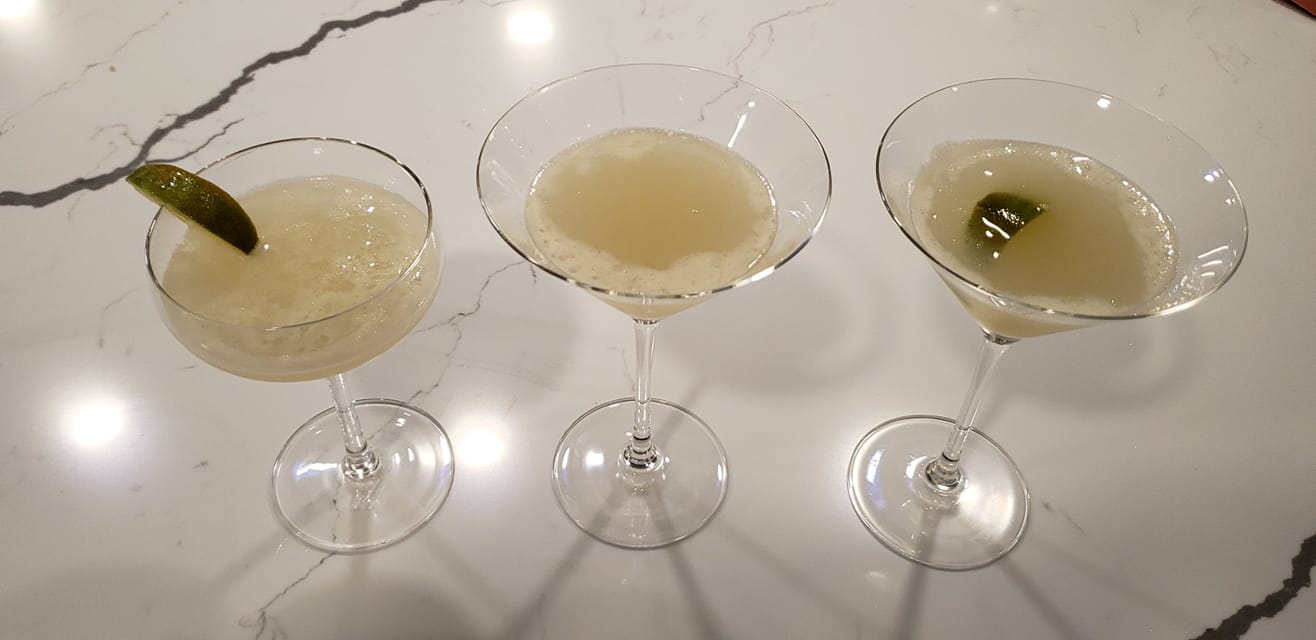
-The Bees Knees-

(Embarrassing sidebar story, this is the first drink I ever ordered at a bar. I was so nervous before going to a real bar that I bought a giant cocktail recipe book from Barnes & Noble and tried to find something that sounded good, having no concept of popular common drinks to order. The bartender had no idea what I was talking about, so I listed the ingredients and he informed me they didn’t have anything with honey. I’m pretty sure what he did end up making for me was a hack job of a Long Island with a blue curacao float, which I do not recommend. And the whole event scared me away from ordering anything but Cosmopolitans and whiskey sours and beer for a solid 5 years. Ok back to the recipe)

2 oz. London dry gin

3/4 oz. fresh lemon juice

3/4 oz. honey simple syrup

Shake w/ ice and strain into a chilled coupe.

(to make the honey syrup, you just mix 4 teaspoons of honey with 1 teaspoon of warm water, whisk, and chill before use. It’s so easy and yummy you’ll want to use it all the time)

I won’t write out all the recipes for the rest, as there are so many good ones and they’re easy enough to look up online, but here’s some crowd faves:

Southside (gin)

Jack Rose (apple brandy)

Amaretto Sour (almond liqueur)

Whiskey Sour (bourbon)

Monkey Gland (gin)

Zombie Punch (rum)

Mojito (rum)

Mai Tai (all the rums)

Smoke & Mirrors (scotch)

French 75 (gin & champagne)

French 76 (vodka & champagne)

Touch & Go (tequila)

Caipirinha (cachaça)

Tom Collins (gin)

Moscow Mule (vodka)

Alright that list ought to get you through the rest of this weird ass week. Ping me if you need more suggestions or have any questions.

Cheers & happy drinking!

11. The Daiquiri: The Seasoning

Online School of Cocktailory 🍸

For drinking #alonetogether

Section 103: The Daiquiri (and other sours)

Citrus garnishes are pretty self-explanatory. Mmmm fruit. You can smell it, you can squeeze it in your drink for more juicey fun, you can just eat it and have mini plastic sword fights with your co-drinkers. What’s not to like.

We already went over what expressing a rind twist is, and that it mists citrus oil over your martini and smells nice. It is also best not to add twists from bitter pithy rinds into your drink, like from a grapefruit or pomelo, or rub them on the rim of the glass, because their oil can numb the tastebuds. Best to express those high over the drink, and if you do put it in your glass, remove it after a couple minutes.

Experiment time. We’ve had a lot of rum and lime juice, so feel free to switch those up for this week. You could go with gin & lime for a Gimlet, vodka & lemon for a Lemon Drop, a grapefruit, lime & rum Daiquiri, or look up something new. Here’s the taste test:

Prepare 3 daiquiris using your recipe of choice. You can share with a friend or make smaller servings if you wish. For the first cocktail, leave the citrus wedge on the rim of the glass as-is for smellsies. For the second one, squeeze the lime (or whatever) wedge into the drink and discard it. For the third one, squeeze the lime (or whatever) wedge into the drink and drop the spent wedge into the glass. Taste each. Obviously the second and third will be more tart from the extra juice, but wait, we’re not done! Wait for 2 minutes and taste again. How is the flavor of the third drink changing? Wait another 5 minutes and taste again. As the drink warms and the alcohol draws the flavor from the pith, the third drink will get more bitter as it sits. The second will have a little extra aroma from squeezing the lime originally, and the first will stay about the same all the way through.

*Bonus Virgin Round* I’m a big fan of soda water w/ lime at restaurants, and am perpetually growing a lime wedge graveyard in the bottom of the glass as the night progresses. But after reading this chapter, I want to modify the experiment above.

Choose 4 fruits to experiment with, I’d recommend a lime, lemon, orange, and something crazy you haven’t had in a long time, like a kumquat. Cuz it’s fun to say when the cashier scanning your produce looks at you all wtf, and you get to say kumquat again. Create opportunities for humor in life wherever possible. Ok, next in 4 glasses of plain seltzer water, squeeze in one of your citrus wedges and drop it in. Taste each and see if kumquat water should be the next big hit. Wait a few minutes and taste them all again to see how they’re changing. Are some peels more bitter than others? Wait another 5 minutes and taste again. Are some fruits losing their juicy yum and getting kinda bland? My lesson learned is squeeze in the fruit or don’t, but toss the spent wedge, cuz it ain’t doing me any favors.

Cheers y’all ❤ Happy Hallows

10. The Daiquiri: The Balance

Online School of Cocktailory 🍸

For drinking #alonetogether

Section 103: The Daiquiri (and other sours)

Fresh squeezed fruit. Not always available to pirates, but usually in stock at ye ol’ grocer.

Since each piece of fruit you buy can vary significantly from sweet to sour, bitter or tart, the proportions you use and how much sweetener you add will vary a little for each drink as well. (oh darn, taste testing again) The flavor of juice will also change if you’re using a citrus hand press, which extracts the sweet/tart juice, vs. using a conical hand juicer, which adds more of the bitter pith from under the peel. Some fruits have more or less pith, so the juicing method is less important for a satsuma, but you’ll want to avoid it for pomelos and grapefruits. The more bitter fruits are also typically mixed with another mild fruit juice so the bitter fruit doesn’t feel like it’s fighting with the alcohol in your cocktail like cranky pirates. Remember the goal here is balance where everything’s calm and nobody’s fighting.

This week’s experiment is to use the same white rum in each of 3 cocktails again, but vary the juice/syrup proportions to find your favorite. You’ll want to prep your ingredients first so your chilled cups don’t get warm while they’re waiting for you. Start by juicing your limes to measure 2.5 oz. juice in one container, and then make 2 oz. of simple syrup in another. Whisk 2 fluid oz. of filtered water (aka 60 grams on a gram scale) with 1/3 cup of white table sugar (aka 60 grams on a gram scale) until the sugar dissolves. Ok now you’re ready.

-A Classic Daiquiri-

is 2oz. white rum, 3/4 oz. lime juice, and 3/4 oz. simple syrup shaken and strained into a chilled coupe with a lime wedge garnish. No 7-11 slurpy machines required. You can skip the garnishes this week since they’re not really vital to the experiment.

-A Less Sweet Daiquiri-

2oz. white rum, 3/4 oz. lime juice, and 1/2 oz. simple syrup shaken and strained into a chilled coupe.

-Daiquiri with More Juicey Flaverz!-

2oz. white rum, 1 oz. lime juice, and 3/4 oz. simple syrup shaken and strained into a chilled coupe.

You can always try this experiment again with different fruits to see how each balances with more or less syrup too. (cocktail recipes from pg. 119 of the Cocktail Codex)

*Virgin Bonus Round*

Try the recipes above but sub 6oz. of plain seltzer water in lieu of the rum and add a pinch of salt (and stir ingredients on ice. Please don’t shake a bunch of soda everywhere and blame me for your mess) Voila, you just made your own San Pellegrino! Now you can adjust the sweetener, sub with stevia, or swap the juices at will to make your personalized favorite recipe whenever you want!

Bon Appétit

9. The Daiquiri: The Corrrre; it be Rum!

Online School of Cocktailory 🍸

For drinking #alonetogether

Section 103: The Daiquiri (and other sours)

Here we have another cocktail that gets a bad rap from all the blended buckets and punch bowls of over-sweetened imposters. But a sour is just a spirit, citrus, and sweetener shaken together where the sweet & sour combo tempers the alcohol.

Rum’s history begins in colonial times in the Caribbean where the islands were prized for agricultural resources, particularly sugarcane. Once the sugar was refined and shipped off, the locals were left with the unglamorous industrial by-product of molasses. Since molasses ferments easily, and the islands and territories were controlled by various European nations, different distilling trading were used on the islands and overseas to produce a very wide range of British rums, French rhums, and Spanish rons.

Spanish rum or ron is column distilled, high proof and heavily filtered to remove most of the molasses flavor. This is the most popular style you’ll see around. British rum is similar, but tends to be richer and have some funkiness from blending different distilling processes. Jamaican rum is always made in pot stills, making it rich with a strong grassy, gasoline, barrel, or banana smell. It’s rarely used as the sole base spirit because of the strong funky flavors. French rhum has a divided history during the Napoleonic Wars where a British blockade halted French imports of sugar from the French Caribbean colonies. France began processing beets to create a sugarcane-like crystal at home, while the French colonies’ economy was devastated by sudden lack of demand for their exports. The excess of sugarcane was juiced to make a rhum agricole, usually distilled twice in copper pot stills, with a bright raw fruit and vegetal tang.

Cachaça, a Brazilian rhum relative, is similar to rhum agricole, but the sugarcane juice is only distilled once, so the proof is lower and the liquor is more rich and pungent. Aged Cachaça can have a cinnamon vanilla flavor described like liquid french toast.

All rums can come in light, medium, gold, barrel-aged, dark, black, and/or full-bodied.

Our homework this week is to compare 3 daiquiris by varying the rums, so best to find a drinking buddy for this one. For each recipe you’ll want to shake it with ice and strain into a small chilled glass like a coupe.

-Light Rum Daiquiri-

2 oz. typical Spanish style white rum

1 oz. lime juice

3/4 oz. simple syrup

-Funky Rum Daiquiri-

2 oz. French rhum agricole, like La Favorite Cour de Canne rhum agricole blanc

1 oz. lime juice

3/4 oz. simple syrup

-Aged Rum Daiquiri-

2 oz. Jamaican rum, like Appleton Estate

1 oz. lime juice

3/4 oz. simple syrup

(Recipes from pg. 113 of the Cocktail Codex)

Comment below if you find any new rums you love or if anyone finds a decent Brazilian cachaça. Enjoy, and see you next week!