8. The Martini: Bonus Round!

Online School of Cocktailory 🍸

For drinking #alonetogether

Section 102: The Martini

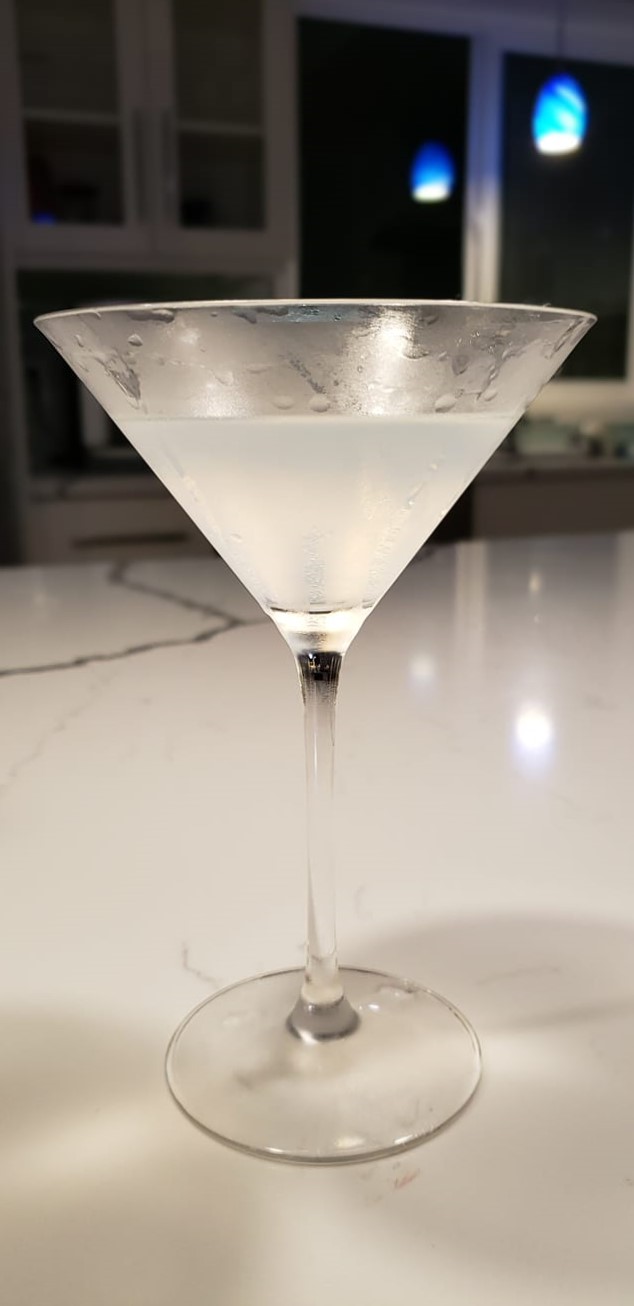
I’ve said “stir on ice then strain” a lot the last few weeks, but Bond always ordered his Martinis shaken. Why? Obviously we want the cocktail chilled, but depending on your drink you also want to add just a little water to get the flavors to blend. Shaking is good for some drinks and keeps them cold, but tends to leave a lot of ice chips in a Martini, watering down an already mildly flavored drink. So what do we do? We practice on a Vesper and cheers to 007.

Start by chilling your martini glass and a mixing glass by setting in the freezer for a few minutes. Cut one lemon twist while you wait. Then with your empty, chilled mixing glass (typically 18 oz.) add 1 1/2 oz. of a London Dry Gin, 3/4 oz. Vodka, & 1/2 oz. Lillet Blanc. Nearly fill the glass with 1″ ice cubes. Give it one good stir, and try a sip with a straw or tasting spoon. It won’t be cold enough yet, and the flavors won’t have had a chance to blend together. Continue stirring for about 20 seconds, and strain into your chilled martini glass. Express your lemon twist over the top and set it on the edge of the glass. Hold your cocktail by the stem (or the rim’s ok if it’s your own glass) so your hand doesn’t heat up the drink too quickly. And Enjoy!! Ahhh, refreshing.

Now that we know a Martini generally follows the 2oz. liquor to 1 oz. aromatized wine with a matching garnish pattern (with variations towards Wet or Dry), you’ll see recipes start to swap and replace again. Here are some extended family 👪 relatives of the Martini.

The grandfather of the martini:

-Manhattan-

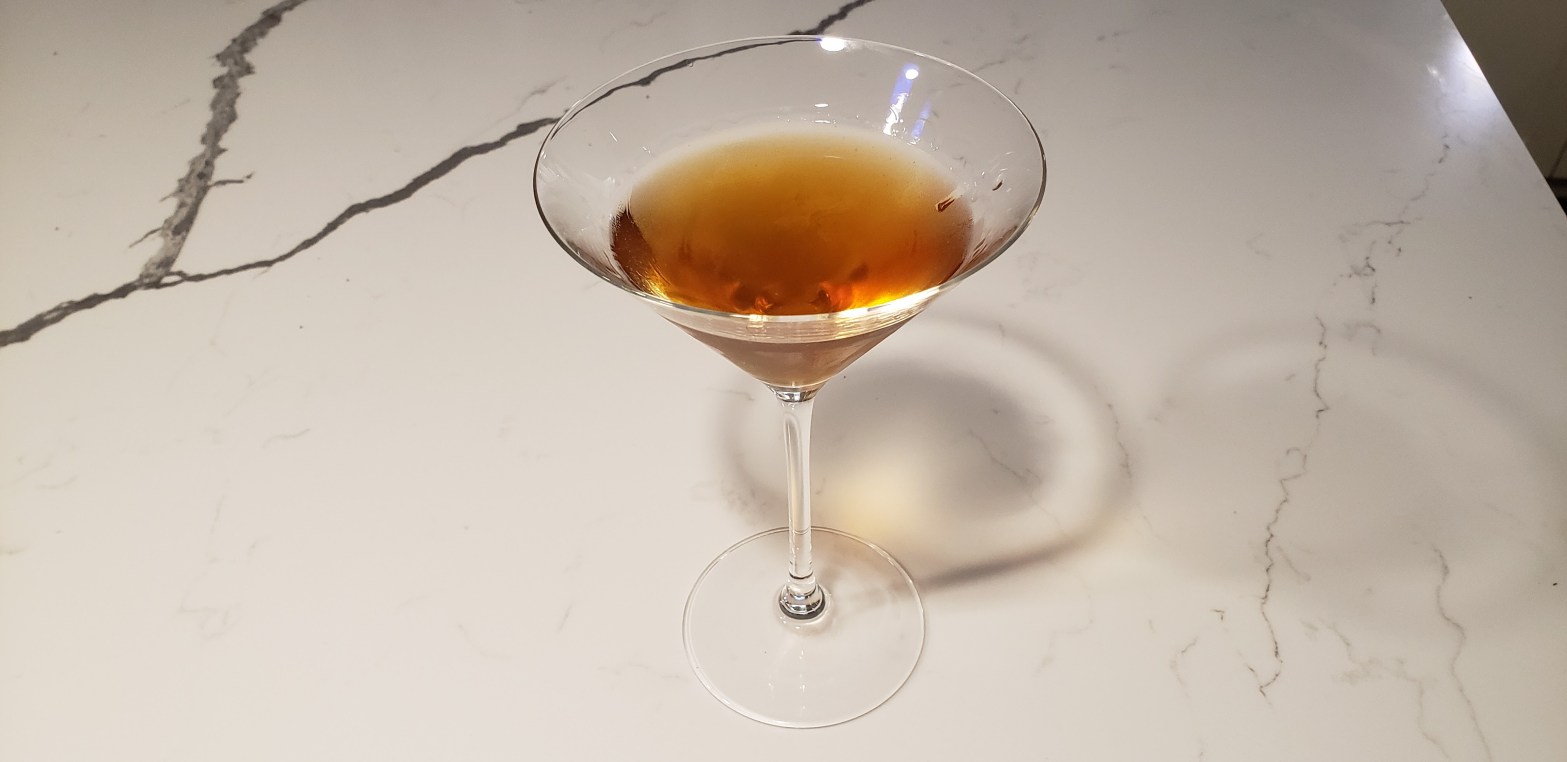
Stir on ice 2 oz. Rye, 1 oz. Cocchi Vermouth di Torino (which is a sweet vermouth), & 2 dashes Angostura bitters. Strain into a chilled glass and garnish with 1 brandied cherry.

-Bamboo-

This is another very old recipe dating around the late 1800’s. Stir on ice 1 1/2 oz. Lustau Los Arcos amontillado sherry, 3/4 oz. blanc vermouth, 3/4 oz. dry vermouth, & 2 dashes orange bitters. Strain into a chilled glass, express a lemon twist over the drink, and place on the rim.

See what other martini recipes you’ve come across and share your favorites. Cheers!
7. The Martini: The Seasoning – Garnishes

Online School of Cocktailory 🍸

For drinking #alonetogether

Section 102: The Martini

Garnishes can be as dainty as a dehydrated pineapple slice, or a full on cheeseburger meal (I’m looking at you, bloody maries). Sure we “eat with our eyes first” and it’s fun to play with food on a plastic sword, but the garnish’s main purpose is to provide additional complementary aromas and mild seasoning, just as the bitters did to the Old Fashioned.

Citrus rind twists (lemon, orange and sometimes grapefruit) are expressed by twisting a strip of rind into a curly cue and pulling to release some of the rind oil over the drink, which smells nice and a little bitter. Then the twist is set on the rim or placed on a pick so you smell it as you drink, without it soaking into your cocktail making it too bitter. Orange can be rubbed on the rim of the glass, or set in the drink since it adds a little sweetness too, but it’s the exception.

Fruit & Veg garnishes are added in the same way we decided if we liked wet or dry martinis last week; it’s all personal preference. Here you can go as minimal as a cucumber slice on the side of your Hendricks, or as briny as a Dirty Martini with a side of extra olives.

This week’s accoutrement experiment should again be served in tiny portions or shared with your quarantine buddy for preemptive portion control. You don’t have to clean your plate at this table. Water exists. Drink responsibly. Etcetera etcetera.

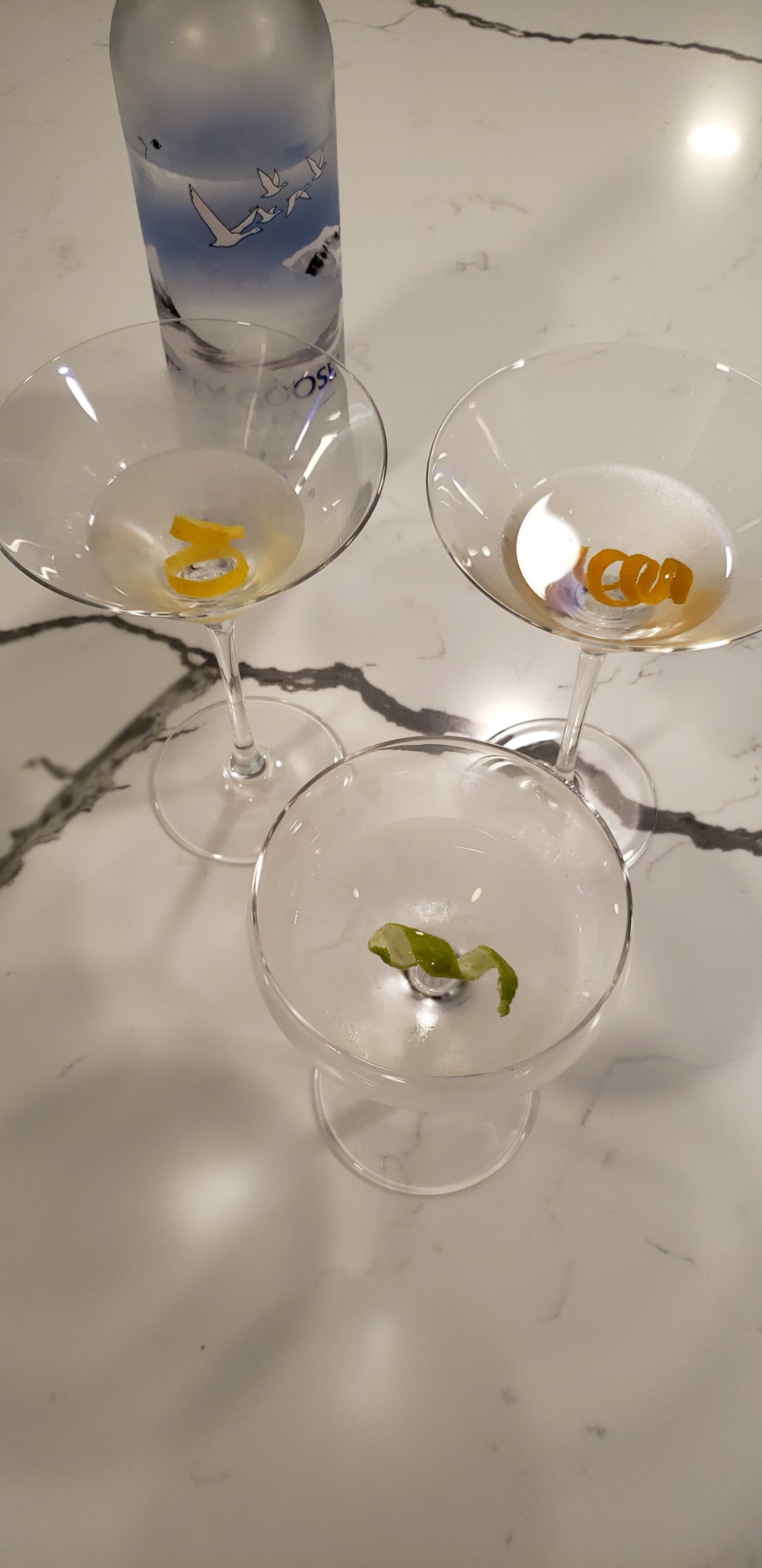
Ok. Stir on ice 6 oz. of a London Dry style gin (or vodka if you prefer) with 3 oz. of a dry or blanc vermouth, then strain into 6 coupes. (or other small glassware of your choice) We want pretty low flavor & aroma liquors for this, since the point is to smell the garnish.

Next pick 5 of the following to try: lemon, lime, orange and/or grapefruit rind twists, cocktail olives with varying stuffings, pickled or cocktail onions.

Leave the first glass with no garnish. Add an olive to the 2nd, an onion to the 3rd, and express one type of citrus twist over each of the remaining glasses, then place the peel into that drink (gasp I know I just said not to do that, but we’re experimenting here. It’s a thing)

Try a sip of each Martini, one at a time, and see if you can smell and/or taste the difference. Then try rubbing a piece of rind onto part of the rim of the citrus glasses and see if the drink becomes more bitter if you sip from that spot and how that affects the cocktail. Now let them all sit for 10 minutes and taste again. The citrus rind soaked drinks will probably get pretty bitter, and the olive and onion drinks will get briny. Which versions do you like best?

For the non-alcoholic version you can do the same experiment with soda water. I would steer away from the pickled onions here, but cucumber might be a good sub.

Cheers friends 🍋 see you next week

6. The Martini: The Balance

Online School of Cocktailory 🍸

For drinking #alonetogether

Section 102: The Martini

The balance for a martini is “aromatized” or “aperitif” (nice-smelling, flavored) wine. Classically dry vermouth like Dolin, but it could be any number of other things. Unlike the Old Fashioned, the proportions of aromatized wine to liquor used to balance a Martini are completely up to you when ordering. The base recipe goes 2 oz. gin to 1 oz. vermouth, or 2-1/2oz. vodka to 1/2 oz. vermouth. They differ because gin is a stronger flavor than vodka, so in order to taste the vermouth, you’ll need a little more. If you ask for a Dry Martini, they’ll cut the vermouth in half and add more liquor. If you ask for Wet, you’re getting an extra 1/2 oz. of vermouth and less liquor (on average. all recipes differ a little) If you’re mixing at home, you do what you want yo.

Vermouth itself is a fairly neutral white wine that’s flavored with herbs and whatnot and fortified with a little extra liquor bumping it up to about 18%, and it comes in 3 main styles. Sweet red or Italian vermouth is thought to be the original. It’s the sweetest of the 3 and smells like cherries and vanilla, but will overpower gin or vodka in a martini by itself. Dry or French vermouth was made next and has more of a bitter alpine herb smell which goes great with either gin or vodka. Blanc (French) or Bianco (Italian) vermouth is clear like a dry vermouth, but not as herby, and also not quite as sweet as the reds. It’s a nice style in the middle that can be mixed with any base spirit.

There are also tons of other aromatized wines that taste great, just remember once they’re open to treat these and vermouth like any other open wine and refrigerate. If it’s been in the fridge for more than a month it’s not getting better.

The assignment this week is actually straight outta the book, and if you have a quarantine buddy you can share these 3 drinks. If not then you could split the recipes in half to try instead, or do the same game like in week 2 where you slowly add more of your balance beverage till you find your favorite version.

Ok step 1, chill 3 glasses so they’re cute and frosty. Step 2, make these 3 cocktails:

“Very Dry Gin Martini”

Stir on ice: 2 1/2 oz. of a London Dry style gin with 1/4 oz. of dry or blanc vermouth. Strain into a small chilled glass. There’s no bitters or garnish for this experiment so the focus is on the balance between spirit & wine.

“Gin Martini Straight Up”

Stir on ice: 2 oz. of the same gin with 1 oz. of the same vermouth. Strain into a small chilled glass.

“Gin Martini, Wet”

Stir on ice: 1 1/2 oz. of your gin with 1 1/2 oz. of your vermouth. Strain into the last chilled glass.

Step 3, try all 3 cocktails and pick your fave. There’s no right answer here, and it’s ok to like all 3 depending on what you’re in the mood for. And you can repeat this experiment with vodka next time, or different aromatized wines.

* Virgin cocktail bonus round: this is a drink my parents would let me play with on airplanes before there was any other in-flight entertainment. You’ll need a can of ginger ale or 7up, a small bottle of orange juice, some ice, and lots of cups. Measure out different blends of soda vs. OJ in each cup, and decide if you prefer your NA screwdrivers with more or less juice (ie: wet or dry) Then try ordering it the next time you feel like venturing out to an IRL restaurant and tell me what happens. We should totally bring back virgin cocktails by popular demand.

See you next week for garnish round!

Cheers! 🍸 🍸

5. The Martini: The Core

Online School of Cocktailory 🍸

For drinking #alonetogether

Section 102: The Martini

The Core: Gin or Vodka? Let the battle begin!

It’s been said that anything you can fit in a martini glass can be called a martini. But today we are going to explore the classics, not 90’s strawberry syrups, as delicious as they may be. While other cocktails are defined by the strong flavors of mixing many ingredients, the martini is a study of intricate details.

Vodka, who often gets descriptors like “neutral”, “flavorless”, or “like sipping rubbing alcohol” does actually have slight variances. You might not be able to tell a good one, but you know when you’ve got a bad one. Vodka can be distilled from any fermentable plant or fruit. So: grains like our last friend whiskey, but also potatoes, grapes, etc… These are then distilled typically to a very high proof of ~95% ABV where most of the flavor is gone, and then the distillate is diluted to drinking proof of ~40% with water. In the end you don’t have a flavor so much as a whisper of a memory from whence it came. Refreshing

Gin, who gets all the pretty descriptors like “floral”, “woodsy”, or “a botanical aromatic bouquet” 💐 is just flavored vodka. It starts with a neutral grain spirit and then any number of spices, seeds, roots, bark, citrus peels, flowers and the like are added, giving every gin a chance to shine and be special in it’s own way. In the U.S. and the E.U. however, liquor can’t be labeled gin unless that list includes juniper berries. So, special with limits I suppose. How typical of us.

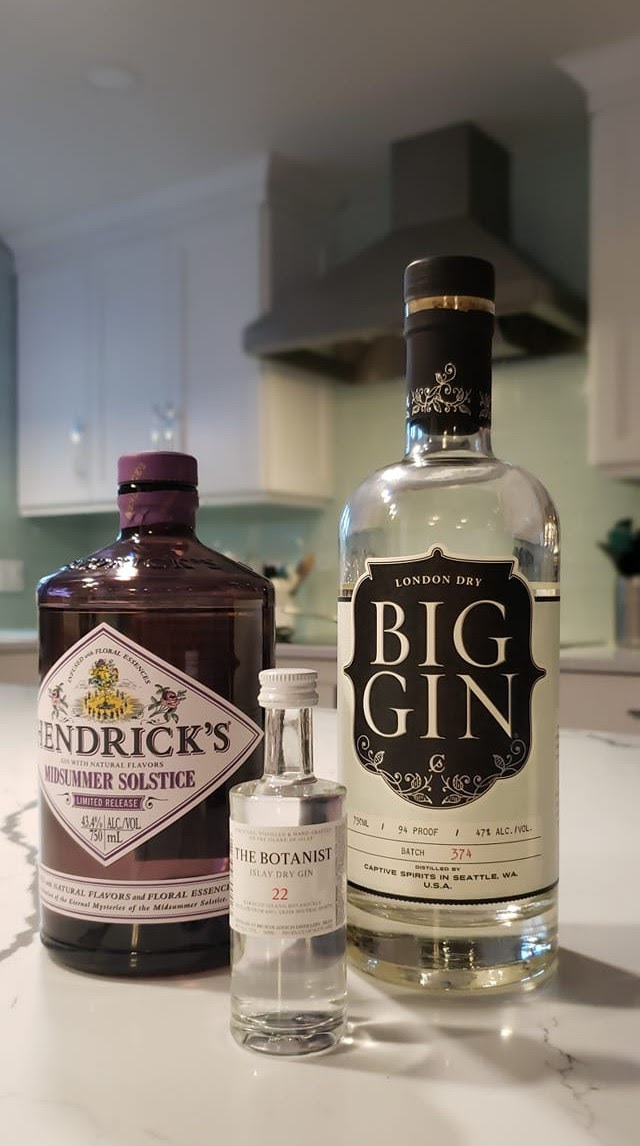
Gins are then divided into: London Dry, which is fairly neutral with that woodsy juniper taste; Old Tom Gin, which is probably the precursor to London Dry and is a bit sweeter, sometimes aged, and has a citrus and licorice flavor; and Contemporary Gin which meets the juniper requirement but the rest can be a grab bag of creativity. Lavender and Bergamot, why not.

Our homework this week is to dig back through those cupboards, or get out your neighbor door knockin’ stick and see what the vodka and gin collection looks like. If you’re trying a few (small) samples remember to start with the mild-flavored stuff and work your way up to the gin to avoid palette fatigue. Then post your new favorites in the comments below. If you find any super weird flavors, I def want to hear about those!

Bonus virgin round: try your hand at infusing and mixing flavors. Just like brewing teas you’ll want to start with a few different mugs of hot water. See what whole spices or citrus peel you’ve got that might go good together, and steep them in the water using a tea ball, cheese cloth, or strain them out after steeping for ~5 minutes. If you need some inspiration to start, look up gingerbread or apple cider spice blends. Yum! Extra bonus points if you figure out what’s in Angostura.

Cheers!

4. The Old Fashioned: Bonus Round!

Well it’s noon on Sunday, which is the same as 5 o’clock any other day, so it’s time for the latest installment of:

Online School of Cocktailory 🍸

For drinking #alonetogether

Section 101: The Old Fashioned

Now that we know an Old Fashioned recipe follows the 2oz. core booze, 1-3 teaspoons of a balancing sweetener, and 2 dashes of seasoning bitters pattern, you can now swap and replace anything you want! Technically there’s lots of rules about glassware and expressing garnishes and different sizes and methodology of ice cubes and stirring vs. shaking drinks, but what are we bartenders? No. We’re drinking at home on the cheap. You do you boo.

Here are some extended family 👪 relatives of the Old Fashioned to get you started:

-The Classic Champagne Cocktail-

Dash your Angostura bitters over a sugar cube until pretty saturated and drop into a champagne flute. Slowly fill the glass with dry champagne. Express a lemon twist over the drink and drop into the glass. So bubble. So yum.

-Mint Julep-

Wow there’s a lot of rules to make these correctly, and I’m no Paula Deen, so here’s my Yankee burbs mom translation:

Step one: wear a giant hat. Next, rub the inside of a metal cup with like 10+ mint leaves (?). Set mint aside. Pour 2oz. bourbon plus 1/4 oz. simple syrup into your cup and half fill with crushed ice. Stir for 10 sec. but don’t touch the sides of the cup (again, insert ‘?’) Add more ice and keep stirring until sides of cup are frosted, so only hold it by the rim I guess… Keep filling with ice to ludicrous mode until overflowing into snowcone shape. Form your mint into a bouquet and embed into top of snowcone. Serve with straw. And you better have made a fruit juice version for the kids too, cuz they’re about to steal your snowcone.

-Hot Toddy-

Squeeze 2 lemon wedges into a mug, and set aside. Add 1.5oz of bourbon, 1-2 teaspoons of honey, and 1 dash Angostura bitters. Pour in 4 oz. of not-quite boiling water, and grate a little nutmeg over the top. Garnish with lemon wedges on a stir pick. Enjoy by the fire reading Tolstoy in your comfy pants.

3. The Old Fashioned: The Seasoning

Online School of Cocktailory 🍸

(aka: how to gussy up survival-quarantine-drinking on the couch in our pajamas) #alonetogether

Section 101: The Old-Fashioned

Last week we learned that sugar adds balance, like fat and salt amplify flavors when cooking dinner. Bitters are like adding in pepper and spices. They’re typically made from macerated barks, roots, herbs, and dried citrus soaked and concentrated in high proof alcohol. So a little goes a long way, like vanilla extract. 2 dashes usually does the trick.

Bitters go generally into 3 categories:

Aromatic, which are sweet, bitter & spicy (think licking a pinch of all your Christmas spices mixed together. Cloves, cinnamon, brown sugar, etc) These go best with aged spirits. Remember: mmmm barrel. Angostura is the most common & widely available aromatic bitters. 

Citrus, which are the orange, grapefruit, and lemon bitters play better with unaged spirits like vodka or tequila blanca. You don’t want a Christmas party in your margarita, but a little orange zest is nice. Really a little orange zest is good in pretty much any cocktail so toss in a couple dashes at will.

The third kind is Savory bitters which covers anything else. Bitter chocolate, chili, lavender, cardamom, licorice, you name it. The adding bitters rule of thumb seems to be: if the flavors sound good together, go for it. 

Our homework: you’ll need plain cold seltzer water and whatever flavors of bitters you’d like to try. I’d recommend Angostura, an orange, and a savory of your choice. You can always try this experiment with baking extracts instead if you prefer, but both are alcohol based so do what you wish. 

Ok, pour 1 cup of cold seltzer water into 4 glasses (if you’re trying 3 bitters. 1 is the blank palette cleanser glass). Add 2-3 drops of one flavor of bitters in 1 glass and stir briefly. The seltzer will spread out the concentrated flavor, and the bubbles bring the aroma to your nose, according to the book. If it’s not strong enough, add a few more drops. After taking a few sips, put 1 drop of bitters on the back of your hand and lick it. The first step shows you the flavors and smells of your bitters, the second tells you how sweet it is, and if you can taste caramelized dark sugar. Some bitters have a chemically sweet taste like baking extracts tend to have, so when you’re making drinks you’ll want to use less of it to avoid that flavor taking over your cocktail. 

If none of that made any sense, try this: put a drop of bitters on one palm of your hand, rub your hands together, and then cup them around your nose & mouth to smell. You can also do this with herbs in your garden. 

(experiment from this week came from pg. 15 of the Cocktail Codex)

2. The Old Fashioned: The Balance

Online School of Cocktailory 🍸

(aka: how to gussy up survival-quarantine-drinking on the couch in our pajamas) #alonetogether

Section 101: The Old-Fashioned

Apparently balance in this case means sugar, who knew 🤷‍♀️ More sweetener obvs makes your drink sweet, but just a smidge will calm the rough edges of taking straight whiskey shots like last week (woo boy!) They call this ingredient an amplifier. It’s meant to enhance the core ingredient’s flavors by adding just a little, not to drown it. Similar to cooking if you throw a steak or vegetable on a hot pan and then eat it, it’ll probably be boring but fine. But you add a little fat and salt and throw it on the bbq, it’s still a steak, but now everything about it tastes amplified. That’s our goal with sweeteners. But add too much and we just ruined dinner.

The original Old Fashioned calls for 1 muddled sugar cube, but times have changed, and waiting for a sugar cube to break down is not something anyone has patience for. Nowadays there are uncountable bottles of sugary cocktail additives, but they are all some version of a regular simple syrup: 50/50 sugar water blend usually with a flavor added. Think fruit juice, cola, grenadine or maraschino, grand marnier, benedictine, schnapps, demerara syrup, st. germaine, madeira, brandy, “margarita mix” and the like.

The assignment this week is to stir on ice: 2 oz. of your new favorite whiskey. Take a taste. Then add 1 teaspoon of something sweet like the items listed above and taste again. See if the whiskey has mellowed out or if a rye has more obvious flavors. Add a second teaspoon of the same sweetener of choice, stir, and see if the flavors change. Is your drink more or less enjoyable now? Finally add a third teaspoon of sweetener. We’re up to 1/2 an oz. of syrup now which is typically the max called for in an Old Fashioned, but we’ve also been drinking some, so the end of our experiment should show how too much sugar starts to take away from the whiskey, rather than amplifying it. Play around with different combos and comment below with your favorites for the rest of us to try!

🍋 For our non-alcoholic friends and family playing along, try the lemonade game. In a tall glass with ice add 1 cup water, 2 oz. of 100% lemon and/or lime juice, and taste. Add 1 teaspoon of sugar or equivalent of sugar-free sweetener you use, stir, and see how the flavor calms. As you add more sweetener the citrus flavor will almost go away entirely as it’s smothered in sugar.

In cocktails as with everything else, we just want to find the balance point, where everything is calm, and no one’s fighting.

Cheers 🥃

1. Intro to The Old Fashioned: The Core

Jet’s Free Little Library

Online School of Cocktailory 🍸

(aka: how to gussy up survival-quarantine-drinking on the couch in our pajamas) #alonetogether (see, now you’re not drinking alone, you’re enrolled in night classes, cheers my friends 🥂 )

Section 101: The Old-Fashioned

Week 1, The Core, or primary flavor component of your drink, in this case Whiskey.

Irish & American Whiskey, Scottish Whisky, Bourbon & Rye are combinations of cereal grains, typically corn, rye, wheat & barley that are malted, fermented, distilled, and then most are aged in oak barrels. The older the whiskey, the more woody barrel you’re tasting. Mmmm barrel.

The percentages of each ingredient determine the mashbill. More corn makes it sweeter, ryes are more spicey, and wheat makes it soft or smooth. To be called a Bourbon, you have to have at least 51% corn in the mashbill. Rye has to have at least 51% rye (surprise), and you guessed it, Wheat Whiskey has 51% min. wheat. There are apparently lots of other styles, like a sour mash Whiskey where varying amounts of the last batch of grain mash is added to each new fermentation batch and sometimes filtered by different methods, but that stuff is getting above my pay grade.

My homework for the week, and yours too should you choose to imbibe: Dig through your cupboards to see if you have anything whiskey-related. If not, try knocking on your neighbor’s door with a mask and a 6ft stick and see if they’ll share with you, like for research purposes. They’re probably lonely too so your odds are good. Try looking up what that whiskey is made of, or try a few different styles to compare bourbon, rye & wheat. Then you can tell me in the comments if this cocktail book is full of crap and they all taste the same, or what the hell is a soft whiskey, or what’s a good word for this tastes like burning. I look forward to reading all your results this week.

Bonus virgin round for non-drinkers and/or your young: buy a few different brands of the same flavor of juice, soda or sparkle-water. See if you can taste any differences, compare ingredients, and pick a fave.

Alright, have fun and see you again next week!!

Online School of Cocktailory 🍸

For drinking #alonetogether 

Shout out to the public library system helping us all survive these #difficulttimes 

(no the Olivia books are for you kiddo, this one’s for mommy)

For my AA/NA and/or pregnant friends & loved ones: once a week for fun I’ll be posting info about cocktail making. I realize this can be a trigger for some, so if you’d like me to turn off these posts for you feel free to message me, or just ignore them, whatever you’re comfortable with, totally no hard feelings. #allmylove #staysafe #drinkresponsibly